

1. Introduction
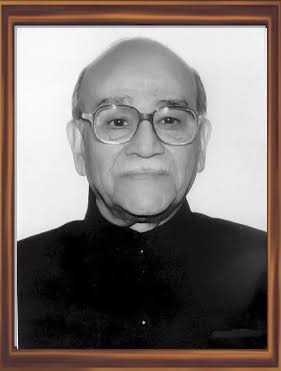
Santu Jouharmal Shahaney was an Indian civil servant and officer of the Indian Ordnance Factories Service (IOFS). He is remembered particularly for becoming the first Indian Director General of Ordnance Factories, a senior position connected with India’s defence production system.
His career was closely associated with the development and administration of India’s ordnance factories during an important period in the country’s early post-independence history. His contribution was recognised by the Government of India with two major civilian honours: the Padma Shri in 1962 and the Padma Bhushan in 1965, both in the Civil Service category. The Government’s Padma records confirm his inclusion among the 1962 Padma Shri recipients and the 1965 Padma Bhushan recipients.
Shahaney’s importance lies not only in the awards he received but also in his role in India’s defence-industrial administration at a time when the country was strengthening its indigenous manufacturing capabilities.
2. Quick Facts
| Particular | Information |
|---|---|
| Full Name | Santu Jouharmal Shahaney |
| Also known as | Santu Shahaney |
| Native Name | Santu Jouharmal Shahaney |
| Date of Birth | Not reliably documented in the major publicly available sources |
| Place of Birth | Not reliably documented |
| Nationality | Indian |
| Occupation / Profession | Civil servant, engineer, Indian Ordnance Factories Service officer |
| Field of Achievement | Civil Service; defence production and ordnance administration |
| Major Position | First Indian Director General of Ordnance Factories |
| Education | Mechanical Engineering, Imperial College London/University of London |
| Years Active | Exact service dates are not reliably documented in accessible sources |
| Padma Shri | 1962 |
| Padma Bhushan | 1965 |
| Date of Death | Not reliably documented in the major sources; sources state that he died at the age of 48 |
The Government of India’s Padma Awards database lists him as “Shri Santu Jouharmal Shahaney”, from West Bengal, in the Civil Service category.
3. Award Information
A. Padma Shri — 1962
| Award Detail | Information |
| Award Name | Padma Shri |
| Award Category | Civil Service |
| Award Year | 1962 |
| Presented By | Government of India / President of India |
| Recipient | Santu Jouharmal Shahaney |
| Official record | Government of India’s 1962 Padma Awards records |
| Exact ceremony date | Not established from the sources consulted |
| Citation / official reason | The accessible official record identifies him as Director General of Ordnance Factories; secondary historical sources associate the honour with his contribution to India’s defence preparedness during the 1962 Sino-Indian War |
The 1962 Gazette of India specifically lists “Shri Santu Jouharmal Shahaney, Director General of Ordnance Factories, Calcutta” among the Padma Shri recipients.
The Government’s current Padma Awards dashboard also lists him as a Padma Shri (1962) recipient in Civil Service from West Bengal.
B. Padma Bhushan — 1965
| Award Detail | Information |
| Award Name | Padma Bhushan |
| Award Category | Civil Service |
| Award Year | 1965 |
| Presented By | Government of India / President of India |
| Recipient | Santu Jouharmal Shahaney |
| Exact ceremony date | Not reliably established in the sources consulted |
| Citation / context | His service as Director General of Ordnance Factories and contribution to India’s defence production capability, particularly in the context of the 1965 India-Pakistan War |
The Government of India’s Padma Awards records list Santu Jouharmal Shahaney among the 25 Padma Bhushan recipients of 1965, under Civil Service.
Historical references associate his 1965 Padma Bhushan with his contribution to India’s defence preparedness during the Indo-Pakistani War of 1965.
Previous and next recipients
The Padma awards were conferred on many people each year, so there was no single “previous” or “next” recipient of the award. For comparison, other notable 1965 Padma Bhushan recipients included Satyajit Ray, Nawang Gombu, Shantanu Lakshman Kirloskar, Jayant Vishnu Narlikar and Triguna Sen.
4. Why Did Santu Shahaney Receive the Awards?
Santu Shahaney’s awards should be understood in the context of India’s early efforts to establish a strong, self-reliant defence production system.
As the first Indian Director General of Ordnance Factories, he occupied a key administrative position in the organisation responsible for manufacturing a wide range of defence equipment and supplies.
His 1962 Padma Shri came at a particularly significant moment following the Sino-Indian War of 1962. His 1965 Padma Bhushan followed another major national-security crisis, the India-Pakistan War of 1965. Government records classify both awards under Civil Service, reflecting recognition of his public service rather than military service.
It is important not to describe him as a military officer. Shahaney was a civil servant and IOFS officer whose work supported India’s defence establishment through ordnance production and administration.
5. Early Life
Information about Santu Shahaney’s childhood and early family life is scarce in publicly accessible historical records.
Available biographical references identify him as Santu Jouharmal Shahaney and record that he belonged to a family with a strong engineering and public-service background.
His brothers also became prominent professionals. His younger brother Ram Shahaney later became the first Chairman and Managing Director of Ashok Leyland, while another brother, Bhagwan Shahaney, served as a brigadier in the Indian Army and later became associated with Instrumentation Limited, Kota. Available biographical material notes that the three brothers studied engineering in England.
His exact date and place of birth are not consistently documented in the sources currently available, so those details should not be stated as fact without a stronger primary source.
6. Education
Santu Shahaney studied Mechanical Engineering in England, with sources identifying Imperial College, London, then a constituent college of the University of London, as his institution of study.
His engineering education was particularly relevant to his later career because India’s ordnance factories required administrators and technical professionals capable of managing large-scale industrial production.
His education combined engineering knowledge with public administration and eventually helped him rise within the Indian Ordnance Factories Service.
7. Career Journey
Santu Shahaney’s professional career was associated with the Indian Ordnance Factories Service (IOFS).
After entering the government service, he progressed through the defence production establishment and eventually became the first Indian Director General of Ordnance Factories (DGOF). This was an important leadership position in India’s defence manufacturing system.
His career can broadly be understood through three stages:
Engineering and professional preparation
His mechanical engineering education in England provided the technical foundation for a career in industrial administration.
Service in the ordnance organisation
He joined the Indian Ordnance Factories Service and became part of the administrative and technical structure responsible for India’s ordnance factories.
Leadership as Director General
He eventually became the first Indian Director General of Ordnance Factories. His leadership came during a period when India faced serious security challenges and needed dependable domestic defence production.
8. Major Achievements
1. First Indian Director General of Ordnance Factories
One of Shahaney’s most significant achievements was becoming the first Indian Director General of Ordnance Factories.
2. Leadership in India’s defence production system
He held a senior position in the organisation responsible for India’s ordnance manufacturing infrastructure.
3. Padma Shri in 1962
The Government of India recognised him with the Padma Shri in the Civil Service category in 1962. The official Gazette identifies him as Director General of Ordnance Factories, Calcutta.
4. Padma Bhushan in 1965
Only three years later, he received the higher civilian honour of Padma Bhushan, again in the Civil Service category.
5. Contribution during a crucial period in Indian history
His leadership coincided with the Sino-Indian War of 1962 and the India-Pakistan War of 1965, periods in which India’s defence manufacturing capabilities were of considerable national importance.
9. Contribution to the Nation
Santu Shahaney’s contribution was primarily through public service and defence production.
India became independent in 1947 with the challenge of building its own industrial and defence capabilities. The ordnance factories were an important part of that effort. As their first Indian Director General, Shahaney represented the growing Indianisation of the country’s defence-industrial administration.
His work contributed to:
- Strengthening India’s indigenous defence manufacturing system.
- Providing administrative leadership to the ordnance factories.
- Supporting India’s defence preparedness during periods of military crisis.
- Developing Indian leadership within an important technical government service.
- Demonstrating how engineering expertise could be applied to national service.
His recognition through two Padma awards illustrates the importance attached to this contribution by the Government of India.
10. Other Awards and Honours
The two well-documented national honours associated with Santu Shahaney are:
- Padma Shri — 1962, Civil Service.
- Padma Bhushan — 1965, Civil Service.
There is also a Santu Shahaney Memorial Shield and Prize associated with the ordnance factories. Historical material describes it as an award donated by his wife, Smt. Nirmala Shahaney, in 1966 for IOFS officers. It recognised sustained high-standard work in production engineering, including boldness of conception and dedication to duty.
This memorial award is an important indication that his professional reputation continued within the ordnance organisation after his death.
11. Legacy and Influence
Santu Shahaney’s legacy is closely connected with the history of India’s defence manufacturing administration.
His career represents the transition from a colonial-era industrial system to an increasingly Indian-led defence production organisation. His position as the first Indian Director General of Ordnance Factories is especially significant because it symbolised Indian leadership in a strategically important technical institution.
The continued existence of the Santu Shahaney Memorial Shield and Prize within the ordnance establishment further reflects the professional legacy attached to his name.
His story is also interesting because he belonged to a family in which engineering, industry and military service all played important roles.
12. Interesting Facts About Santu Shahaney
- His full name was Santu Jouharmal Shahaney.
- He was an Indian Ordnance Factories Service officer.
- He became the first Indian Director General of Ordnance Factories.
- He studied Mechanical Engineering in England.
- He received the Padma Shri in 1962.
- He received the Padma Bhushan in 1965.
- Both awards were in the Civil Service category.
- He received two Padma awards within only three years.
- His younger brother Ram Shahaney became the first Chairman and Managing Director of Ashok Leyland.
- Another brother, Bhagwan Shahaney, served as a brigadier in the Indian Army.
- Sources state that Santu Shahaney died at the age of 48.
- A Santu Shahaney Memorial Shield and Prize was established in the ordnance organisation after his death.
13. Quotes
No reliably authenticated personal quotation by Santu Shahaney has been located in the principal government and biographical sources consulted.
For a factual biography, it is better not to attribute an invented motivational quotation to him. A blog can instead use a contextual statement such as:
“Santu Shahaney’s career reflected the important role of engineering and public service in building India’s defence-production capabilities after independence.”
This is a summary of his career, not a quotation by Shahaney.
14. Timeline
| Year / Period | Event |
| Early life | Born; exact date and place are not reliably documented in accessible sources |
| Education | Studied Mechanical Engineering in England, associated with Imperial College London / University of London |
| Career | Joined the Indian Ordnance Factories Service |
| Before 1962 | Rose to senior leadership in the ordnance factories organisation |
| 1962 | Became/served as Director General of Ordnance Factories and received the Padma Shri |
| 1962 | His work coincided with India’s defence requirements during the Sino-Indian War |
| 1965 | Received the Padma Bhushan in the Civil Service category |
| 1965 | His career coincided with the India-Pakistan War and increased defence-production requirements |
| 1966 | Santu Shahaney Memorial Shield and Prize was established in his memory |
| Later | Died at the age of 48 |
The 1962 Government Gazette confirms his position as Director General of Ordnance Factories, while the Government’s Padma records confirm his 1962 Padma Shri and 1965 Padma Bhushan.
15. References
For a blog post, the following sources are preferable to relying solely on Wikipedia:
- Government of India — Padma Awards Dashboard
The official database lists Santu Jouharmal Shahaney as a Padma Shri recipient in 1962 and Padma Bhushan recipient in 1965. - Government of India — Gazette of India, 1962
The 1962 Gazette identifies Santu Jouharmal Shahaney as Director General of Ordnance Factories, Calcutta, among the Padma Shri recipients. - Ministry of Home Affairs — Padma Awards Directory (1954–2017)
The government directory lists Santu Jouharmal Shahaney under West Bengal, Padma Bhushan, Civil Service, 1965. - Government of India — Padma Awards 1965 database
The official 1965 record lists 25 Padma Bhushan recipients, including Santu Jouharmal Shahaney. - Historical biographical references on Santu Shahaney
These provide additional information about his engineering education, IOFS career, family and age at death. - Historical information on the Santu Shahaney Memorial Shield and Prize
This provides evidence of the memorial award established in his name within the ordnance organisation.
16. Related Personalities
Readers interested in Santu Shahaney may also find the careers of the following personalities relevant:
- R. M. Muzumdar — another senior Indian Ordnance Factories Service officer who later became Director General of Ordnance Factories and received the Padma Bhushan.
- K. C. Banerjee — IOFS officer associated with the production of the 7.62 mm self-loading rifle during the 1965 war and later a Padma Shri recipient.
- H. P. S. Ahluwalia — military officer, mountaineer and civil servant who received both the Padma Shri and Padma Bhushan.
- Bhagwan Shahaney — Santu Shahaney’s brother, who served as a brigadier and later chaired Instrumentation Limited.
- Ram Shahaney — Santu Shahaney’s younger brother and the first Chairman and Managing Director of Ashok Leyland.
17. Frequently Asked Questions (FAQ)
Who was Santu Shahaney?
Santu Jouharmal Shahaney was an Indian civil servant and Indian Ordnance Factories Service officer who became the first Indian Director General of Ordnance Factories.
What was Santu Shahaney famous for?
He is best known for his leadership of India’s ordnance factories and for becoming their first Indian Director General.
Which awards did Santu Shahaney receive?
He received the Padma Shri in 1962 and the Padma Bhushan in 1965, both in the Civil Service category.
Why did Santu Shahaney receive the Padma Shri?
The official record identifies him as Director General of Ordnance Factories. Historical accounts connect the recognition with his contribution to India’s defence preparedness around the 1962 Sino-Indian War.
Why did he receive the Padma Bhushan?
He received the Padma Bhushan in 1965 in the Civil Service category. His recognition is historically associated with his leadership and contribution to India’s defence production during the period of the 1965 India-Pakistan War.
What did Santu Shahaney study?
He studied Mechanical Engineering in England, with biographical sources identifying Imperial College London/University of London.
Was Santu Shahaney a military officer?
No. He was a civil servant and IOFS officer, although his work was directly connected with India’s defence production system.
When was Santu Shahaney born?
His exact date of birth is not reliably established in the major publicly accessible sources consulted.
When did Santu Shahaney die?
Available biographical sources state that he died at the age of 48, but a reliably documented exact date of death was not found in the principal sources consulted.
What is the Santu Shahaney Memorial Shield?
It was a memorial award associated with the ordnance factories. Historical material says it was donated by Smt. Nirmala Shahaney in 1966 and recognised outstanding and sustained production-engineering work by eligible IOFS officers.
What is Santu Shahaney’s greatest legacy?
His most distinctive legacy is his role as the first Indian Director General of Ordnance Factories, representing Indian technical and administrative leadership in the country’s defence-production system.
Conclusion
Santu Jouharmal Shahaney occupies an important but relatively under-documented place in the history of India’s civil service and defence production. As the first Indian Director General of Ordnance Factories, he helped lead a strategically important national institution during the formative decades after independence.
His Padma Shri in 1962 and Padma Bhushan in 1965 demonstrate the Government of India’s recognition of his public service.
Although many details of his personal life remain difficult to establish from publicly available records, his professional legacy is clear: engineering expertise, civil service and defence production came together in a career dedicated to strengthening India’s national capabilities.
About the Author