
1. Introduction
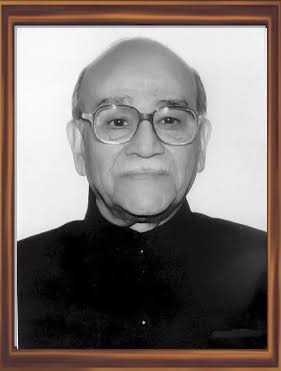
Kalpathi Ramakrishna Ramanathan (28 February 1893 – 31 December 1984) was a pioneering Indian physicist and meteorologist whose work played an important role in the development of atmospheric science and geophysics in India.
Widely known as K. R. Ramanathan, he was the first Director of the Physical Research Laboratory (PRL), Ahmedabad, an institution founded by Dr. Vikram Sarabhai. Ramanathan helped establish PRL as an important centre for research in atmospheric sciences, meteorology and related areas. PRL continues to honour his legacy through the K. R. Ramanathan Auditorium.
Ramanathan began his scientific career as a physicist and later developed a distinguished career in meteorology and atmospheric science. He worked with the India Meteorological Department (IMD) and conducted important research into atmospheric electricity, ozone, solar and terrestrial radiation, geomagnetism and the upper atmosphere.
He also worked closely with the celebrated Indian physicist C. V. Raman. In 1921, Ramanathan went to Calcutta to collaborate with Raman on X-ray diffraction studies in liquids. His research from this period formed the basis of his D.Sc. from the University of Madras, reportedly the university’s first D.Sc. degree.
Ramanathan was recognised with some of India’s highest scientific honours. He received the Padma Bhushan in 1965 and the Padma Vibhushan in 1976, both in the field of Science and Engineering. He also received the Aryabhata Medal in 1977 from the Indian National Science Academy.
His influence continues through the K. R. Ramanathan Medal, instituted by the Indian National Science Academy for outstanding contributions to atmospheric sciences and meteorology.
2. Quick Facts
| Particular | Information |
|---|---|
| Full Name | Kalpathi Ramakrishna Ramanathan |
| Popular Name | K. R. Ramanathan |
| Date of Birth | 28 February 1893 |
| Place of Birth | Kalpathi, Palakkad, Madras Presidency, British India |
| Date of Death | 31 December 1984 |
| Place of Death | Ahmedabad, Gujarat, India |
| Nationality | Indian |
| Profession | Physicist and Meteorologist |
| Fields | Physics, Meteorology, Atmospheric Science, Geophysics |
| Doctoral Mentor | C. V. Raman |
| Major Institution | Physical Research Laboratory, Ahmedabad |
| Major Position | First Director, Physical Research Laboratory |
| Major Government Organisation | India Meteorological Department |
| Years Active | Early 20th century–1984 |
| Padma Bhushan | 1965 |
| Padma Vibhushan | 1976 |
| Aryabhata Medal | 1977 |
| International Recognition | International Meteorological Organization Prize |
| Memorial Award | K. R. Ramanathan Medal |
The Indian National Science Academy’s biographical record identifies Ramanathan as an influential scientist whose work inspired generations of researchers.
3. Award Information
A. Padma Bhushan – 1965
| Award Detail | Information |
| Award Name | Padma Bhushan |
| Award Category | Science and Engineering |
| Award Year | 1965 |
| Awardee | Dr. Kalpathi Ramakrishna Ramanathan |
| Position at the Time | Director, Physical Research Laboratory, Ahmedabad |
| Presented By | President of India |
| Field | Science and Engineering |
The official Government of India Padma Awards database lists Dr. Kalpathi Ramakrishna Ramanathan as a 1965 Padma Bhushan recipient in Science and Engineering from Tamil Nadu.
The original 26 January 1965 Gazette of India lists him as:
Dr. Kalpathi Ramakrishna Ramanathan, Director, Physical Research Laboratory, Ahmedabad.
Why was he honoured?
The Padma Bhushan recognised Ramanathan’s distinguished scientific contributions, particularly in physics, meteorology and atmospheric sciences.
B. Padma Vibhushan – 1976
| Award Detail | Information |
| Award Name | Padma Vibhushan |
| Award Category | Science and Engineering |
| Award Year | 1976 |
| Awardee | Dr. Kalpathi Ramakrishna Ramanathan |
| Presented By | President of India |
| Importance | India’s second-highest civilian award |
The Government of India’s official Padma Awards database records Ramanathan as a 1976 Padma Vibhushan recipient in Science and Engineering.
This honour recognised the exceptional breadth and lasting importance of his scientific contributions.
C. Aryabhata Medal – 1977
Ramanathan received the Aryabhata Medal from the Indian National Science Academy in 1977.
The medal further recognised his distinguished scientific contributions.
D. International Meteorological Organization Prize
Ramanathan received the International Meteorological Organization Prize in 1959. He was also elected an honorary fellow of the Royal Meteorological Society in 1960.
4. Why Did K. R. Ramanathan Receive These Awards?
Ramanathan’s honours reflected a long and influential scientific career.
His work contributed to:
- Atmospheric physics
- Meteorology
- Atmospheric ozone research
- Solar and terrestrial radiation
- Atmospheric electricity
- Geomagnetism
- Upper-atmosphere studies
- Weather and climate research
- Development of scientific institutions
- Training of young Indian scientists
He was also an important institution-builder. As the first Director of PRL, he helped create the scientific foundation of an institution that would later become one of India’s leading centres for space and atmospheric research.
5. Early Life
K. R. Ramanathan was born on 28 February 1893 in Kalpathi, in the Palakkad region of present-day Kerala.
He came from a scholarly family. His father was a Sanskrit and Vedic scholar who also had an interest in astronomy. Ramanathan demonstrated strong academic ability from an early age.
His mother died when he was still young, and he reportedly had to take on family responsibilities, including caring for his younger sisters and grandmother. Despite these challenges, he continued his education and developed a strong interest in science.
His early education in Palakkad was followed by studies at Government Victoria College, where he completed his intermediate education.
He then moved to Madras, now Chennai, for higher education.
6. Education
Ramanathan studied at Government Victoria College, Palakkad, and later joined Presidency College, Madras, where he studied physics.
He completed his:
- B.A. in 1914
- M.A. in Physics in 1917
His academic performance attracted the attention of his teachers. After completing his postgraduate studies, he was appointed as a demonstrator in physics at the Maharaja’s College of Science in Thiruvananthapuram.
Association with C. V. Raman
A major turning point came when Ramanathan began working with Sir C. V. Raman.
In 1921, he moved to Calcutta and worked with Raman on the study of X-ray diffraction in liquids.
His research from this period earned him a D.Sc. from the University of Madras. The degree was historically significant because it was reportedly the first D.Sc. awarded by the University of Madras.
His association with C. V. Raman had a lasting influence on his scientific career.
7. Career Journey
Early Academic Career
Ramanathan began his career as a demonstrator in physics at Maharaja’s College of Science in Thiruvananthapuram.
He later served as an academic at Rangoon University in Burma, where he worked as an Assistant Professor of Physics.
His interest in research, however, remained strong.
India Meteorological Department
In 1925, Ramanathan joined the India Meteorological Department as a senior scientist.
He remained associated with the organisation until his retirement in 1948.
During his meteorological career, he worked on several areas of atmospheric science.
His research included:
- Atmospheric electricity
- Ozone
- Solar radiation
- Terrestrial radiation
- Geomagnetism
- Upper-atmosphere conditions
- Meteorological observations
He also worked on establishing and developing geomagnetic facilities in India.
Atmospheric Research
One of Ramanathan’s important scientific interests was the ozone layer.
He studied atmospheric ozone and ultraviolet radiation using observational techniques available before the era of satellites.
His work helped expand understanding of the relationship between atmospheric ozone, radiation and atmospheric circulation.
He also established Dobson ozone spectrophotometer stations in India, strengthening India’s ability to conduct systematic ozone observations.
First Director of PRL
In 1948, Ramanathan joined the newly established Physical Research Laboratory in Ahmedabad and became its first Director.
PRL had been founded by Vikram Sarabhai, and Ramanathan’s appointment gave the young institution a highly experienced scientist to lead its research programme.
At PRL, he concentrated particularly on atmospheric science.
His leadership helped create a research environment in which younger scientists could conduct advanced work in atmospheric physics and related areas.
Mentor to Young Scientists
Ramanathan was known as a supportive mentor.
PRL records show that several researchers completed doctoral work under his supervision. The PRL Alumni Association lists a number of PhD researchers whose supervisor was K. R. Ramanathan.
His influence therefore extended beyond his own research to the development of India’s scientific workforce.
Later Years
Ramanathan formally retired in 1966, but he continued to contribute to PRL as an Emeritus Professor.
He remained interested in scientific activities until the final years of his life.
He died peacefully on the night of 30–31 December 1984.
8. Major Achievements
1. Pioneer of Indian Atmospheric Science
Ramanathan was one of the early Indian scientists to make atmospheric science a major field of scientific investigation.
2. First Director of PRL
He became the first Director of the Physical Research Laboratory, Ahmedabad, and helped establish its research culture.
3. Research on Ozone
He conducted pioneering research on atmospheric ozone and helped establish ozone measurement facilities in India.
4. Work on Solar and Terrestrial Radiation
His research contributed to understanding radiation processes in Earth’s atmosphere.
5. Geomagnetic Research
He was involved in the establishment of geomagnetic research facilities, including work connected with Colaba and Alibag.
6. Meteorological Research
His work with the India Meteorological Department strengthened India’s scientific understanding of weather and atmospheric processes.
7. International Scientific Leadership
Ramanathan served as President of the International Union of Geodesy and Geophysics (IUGG) from 1954 to 1957.
8. Training Young Scientists
As a researcher and institutional leader, he supervised and mentored young scientists who later contributed to Indian science.
9. National Recognition
He received the Padma Bhushan in 1965 and the Padma Vibhushan in 1976.
10. Scientific Legacy
The K. R. Ramanathan Medal was established in his honour for outstanding contributions to atmospheric sciences and meteorology.
9. Contribution to the Nation
K. R. Ramanathan made important contributions to India at a time when modern scientific institutions were still developing.
Development of Meteorology
His work helped strengthen scientific meteorology in India.
Atmospheric Research
His investigations into ozone, radiation and atmospheric conditions contributed to India’s understanding of Earth’s atmosphere.
Scientific Institution Building
As PRL’s first director, he helped establish one of India’s most important scientific research institutions.
Training Scientists
He mentored younger researchers and helped create a scientific tradition that continued at PRL.
International Scientific Cooperation
His leadership in international scientific organisations helped give Indian atmospheric science a stronger international presence.
Encouraging Scientific Research
His career demonstrated that fundamental scientific research could be combined with national institution-building.
10. Other Awards and Honours
Ramanathan received numerous national and international honours.
| Year | Award / Honour |
| 1934 | Foundation Fellow, Indian Academy of Sciences |
| 1935 | Foundation Fellow, Indian National Science Academy |
| 1943 | Title of Diwan Bahadur |
| 1952 | Fellow, Indian Association for the Cultivation of Science |
| 1959 | International Meteorological Organization Prize |
| 1960 | Honorary Fellow, Royal Meteorological Society |
| 1965 | Padma Bhushan |
| 1976 | Padma Vibhushan |
| 1977 | Aryabhata Medal |
These honours are recorded in biographical material from the Indian National Science Academy and other scientific records.
11. Legacy and Influence
K. R. Ramanathan’s legacy is closely connected with the development of atmospheric science in India.
His most visible institutional legacy is the Physical Research Laboratory in Ahmedabad. As its first director, he helped establish the scientific foundations of the laboratory. PRL continues to remember him alongside its founder, Vikram Sarabhai.
His scientific legacy is also preserved through the K. R. Ramanathan Medal, awarded by the Indian National Science Academy for outstanding work in atmospheric sciences and meteorology. The medal was instituted in 1987.
The medal has subsequently been awarded to prominent atmospheric scientists. For example, INSA records show Sulochana Gadgil as its 2017 recipient.
PRL also maintains a K. R. Ramanathan Auditorium at its Ahmedabad campus, demonstrating the continuing institutional remembrance of its first director.
His influence was not limited to awards and buildings. Through his students and colleagues, his scientific approach helped shape generations of Indian atmospheric scientists.
12. Interesting Facts
- His full name was Kalpathi Ramakrishna Ramanathan.
- He was born on 28 February 1893 in Kalpathi, Palakkad.
- His birthday was the same date on which the Raman Effect was announced by C. V. Raman in 1928, although the two events were unrelated.
- He studied physics at Presidency College, Madras.
- He worked with C. V. Raman in Calcutta.
- His research with Raman involved X-ray diffraction in liquids.
- His D.Sc. from the University of Madras was reportedly the university’s first D.Sc. degree.
- He worked at the India Meteorological Department for more than two decades.
- He was one of India’s early researchers in atmospheric ozone.
- He helped establish Dobson ozone spectrophotometer stations in India.
- He became the first Director of PRL.
- He was a mentor to several generations of young scientists.
- He served as President of the International Union of Geodesy and Geophysics from 1954 to 1957.
- He received the Padma Bhushan in 1965.
- He received the Padma Vibhushan in 1976.
- He received the Aryabhata Medal in 1977.
- The K. R. Ramanathan Medal was named in his honour.
- He continued scientific activities after formal retirement.
- PRL has named an auditorium after him.
- He died on 31 December 1984, aged 91.
13. Quotes
Unlike some modern public figures, K. R. Ramanathan left relatively few widely circulated quotations that can be confidently attributed to him.
For a factual biography, it is therefore better not to invent or loosely attribute a quotation to him.
His scientific philosophy is better represented through his career: he combined fundamental research, meteorological observation, institution-building and mentoring of younger scientists.
A useful way to describe his legacy is:
“His greatest contribution was not only the science he conducted, but also the scientific institutions and researchers he helped build.”
This is a summary of his legacy, not a direct quotation by Ramanathan.
14. Timeline
| Year | Event |
| 1893 | Born on 28 February in Kalpathi, Palakkad |
| 1914 | Completed B.A. |
| 1917 | Completed M.A. in Physics |
| 1917 onward | Began academic career in physics |
| 1921 | Went to Calcutta to work with C. V. Raman |
| 1921–22 | Conducted X-ray diffraction research |
| 1922 | Joined Rangoon University |
| 1925 | Joined India Meteorological Department |
| 1934 | Became Foundation Fellow of Indian Academy of Sciences |
| 1935 | Became Foundation Fellow of Indian National Science Academy |
| 1948 | Became first Director of Physical Research Laboratory |
| 1954–1957 | President of International Union of Geodesy and Geophysics |
| 1959 | Received International Meteorological Organization Prize |
| 1960 | Became Honorary Fellow of Royal Meteorological Society |
| 1965 | Received Padma Bhushan |
| 1966 | Retired from active service |
| 1976 | Received Padma Vibhushan |
| 1977 | Received Aryabhata Medal |
| 1984 | Died on 31 December |
| 1987 | K. R. Ramanathan Medal established in his honour |
15. References
Government of India – Padma Awards
The official Padma Awards database records Ramanathan’s 1965 Padma Bhushan in Science and Engineering and his 1976 Padma Vibhushan in Science and Engineering.
Gazette of India – 1965
The official 1965 Gazette identifies him as Dr. Kalpathi Ramakrishna Ramanathan, Director, Physical Research Laboratory, Ahmedabad.
Indian National Science Academy
The INSA biographical material records his awards, scientific career and influence on Indian science.
Physical Research Laboratory
PRL records Ramanathan as its founding director and continues to commemorate him through its auditorium and annual remembrance activities.
India Science, Technology and Innovation Portal
The Government of India’s science portal provides information about the K. R. Ramanathan Medal, including its purpose of encouraging outstanding work in atmospheric sciences and meteorology.
16. Related Personalities
For internal links on your blog, you can create related articles about:
- C. V. Raman – Nobel Prize-winning physicist and Ramanathan’s mentor.
- Vikram Sarabhai – founder of the Physical Research Laboratory.
- Homi J. Bhabha – pioneering Indian physicist and institution builder.
- Meghnad Saha – pioneering Indian astrophysicist.
- Satyendra Nath Bose – eminent Indian physicist.
- M. G. K. Menon – prominent Indian physicist and science administrator.
- U. R. Rao – Indian space scientist associated with PRL and India’s satellite programme.
- Anna Mani – Indian physicist and meteorologist whose work contributed to atmospheric and meteorological science.
- Sulochana Gadgil – Indian atmospheric scientist and recipient of the K. R. Ramanathan Medal.
- Jayant Narlikar – Indian astrophysicist and Padma awardee.
- Satish Dhawan – Indian aerospace scientist and former ISRO chairman.
- Yash Pal – Indian physicist and science communicator.
17. Frequently Asked Questions (FAQ)
Who was K. R. Ramanathan?
K. R. Ramanathan, whose full name was Kalpathi Ramakrishna Ramanathan, was an Indian physicist and meteorologist known for pioneering work in atmospheric science and for being the first Director of the Physical Research Laboratory in Ahmedabad.
When was K. R. Ramanathan born?
He was born on 28 February 1893 in Kalpathi, Palakkad, in present-day Kerala.
When did K. R. Ramanathan die?
He died on 31 December 1984, aged 91.
What was K. R. Ramanathan famous for?
He was famous for his research in meteorology, atmospheric physics, ozone, radiation and geophysics, and for establishing PRL as its first director.
Who was K. R. Ramanathan’s mentor?
He worked closely with the famous Indian physicist C. V. Raman and conducted research with him in Calcutta.
What did K. R. Ramanathan study?
His scientific work covered physics, meteorology, atmospheric electricity, ozone, radiation, geomagnetism and upper-atmosphere science.
Where did K. R. Ramanathan study?
He studied at Government Victoria College, Palakkad, and Presidency College, Madras.
When did K. R. Ramanathan receive the Padma Bhushan?
He received the Padma Bhushan in 1965 in the field of Science and Engineering.
When did K. R. Ramanathan receive the Padma Vibhushan?
He received the Padma Vibhushan in 1976, also in Science and Engineering.
What was K. R. Ramanathan’s role at PRL?
He was the first Director of the Physical Research Laboratory, Ahmedabad.
Who founded PRL?
The Physical Research Laboratory was founded by Vikram Sarabhai. Ramanathan became its first director and played a major role in establishing its research programme.
About the Author