
1. Introduction
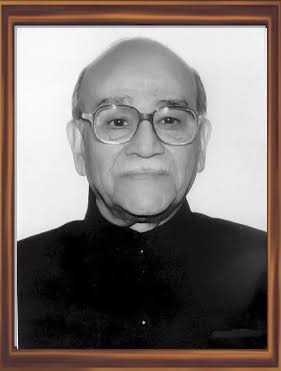
Air Marshal Ramaswamy Rajaram, DFC (1917–1969) was a distinguished Indian Air Force officer who played an important role in the development of India’s air power before and after Independence.
A veteran of the Second World War, Rajaram served with the Royal Indian Air Force during the Burma campaign and later rose through the senior ranks of the Indian Air Force. He commanded important formations, including the Eastern Air Command and Western Air Command.
Rajaram is particularly remembered for his leadership of the Western Air Command during the Indo-Pakistani War of 1965. In recognition of his leadership and service, the Government of India awarded him the Padma Bhushan in 1965. The official Gazette lists him as Air Vice Marshal Ramaswamy Rajaram, Air Officer Commanding-in-Chief, Western Air Command.
He later became the first Air Force officer to serve as Commandant of the National Defence College and subsequently served as Vice Chief of the Air Staff.
Rajaram died in service in 1969, while holding the position of Vice Chief of the Air Staff.
2. Quick Facts
| Particular | Information |
|---|---|
| Full Name | Ramaswamy Rajaram |
| Military Rank | Air Marshal |
| Service | Indian Air Force |
| Earlier Service | Royal Indian Air Force |
| Born | 1917 |
| Place of Birth | Madurai, Madras Presidency, British India |
| Died | 18 June 1969 |
| Place of Death | New Delhi, India |
| Nationality | Indian |
| Profession | Air Force officer |
| Field of Achievement | Military aviation and air defence |
| Years Active | 1939–1969 |
| Major War Service | Second World War; Indo-Pakistani War of 1965 |
| Highest Rank | Air Marshal |
| Major Commands | Western Air Command, Eastern Air Command, No. 1 Operational Group |
| Major Award | Padma Bhushan |
| Military Decoration | Distinguished Flying Cross (DFC) |
| Final Major Appointment | Vice Chief of the Air Staff |
| Other Important Role | Commandant, National Defence College |
Rajaram’s career included service in the Second World War, senior operational commands and key appointments at Air Headquarters.
3. Award Information
Padma Bhushan
The most important civilian honour associated with Rajaram was the Padma Bhushan, awarded in 1965.
| Award Detail | Information |
| Award Name | Padma Bhushan |
| Award Category | Civil Service |
| Award Year | 1965 |
| Awardee | Air Vice Marshal Ramaswamy Rajaram |
| Position at Award | Air Officer Commanding-in-Chief, Western Air Command |
| Presented By | President of India |
| Reason for Recognition | Leadership and distinguished service, particularly during the 1965 war |
| Official Record | Gazette of India, 9 November 1965 |
The official Gazette of India notification dated 9 November 1965 lists Air Vice Marshal Ramaswamy Rajaram among the Padma Bhushan recipients.
The official Padma Awards database also records him as a 1965 Padma Bhushan recipient under Civil Service from Tamil Nadu.
Distinguished Flying Cross
Before receiving the Padma Bhushan, Rajaram had been awarded the Distinguished Flying Cross (DFC) in 1945 for his service during the Second World War.
Why was he honoured?
Rajaram was recognised for his distinguished military career and especially his leadership as Air Officer Commanding-in-Chief, Western Air Command, during the 1965 Indo-Pakistani War.
4. Why Did Ramaswamy Rajaram Receive the Award?
Ramaswamy Rajaram received the Padma Bhushan in 1965 in recognition of his distinguished service and leadership in the Indian Air Force.
His role during the 1965 India-Pakistan War was especially significant. As Air Officer Commanding-in-Chief of Western Air Command, he was responsible for a major operational theatre during the conflict.
His earlier experience in the Second World War and his leadership of important Indian Air Force formations also contributed to his reputation as a senior and experienced military commander.
The official award notification identifies him by his position as Air Officer Commanding-in-Chief, Western Air Command.
5. Early Life
Ramaswamy Rajaram was born in 1917 in Madurai, then part of the Madras Presidency under British rule.
His father, B. S. Ramaswamy Iyer, was a Superintending Engineer in the Public Works Department.
Rajaram developed an interest in aviation at a young age. He joined the Madras Flying Club and obtained his flying licence in 1935.
His early exposure to aviation helped prepare him for his later career in military flying.
6. Education
Rajaram studied at Presidency College in Madras (now Chennai).
He later joined Madras Law College in 1938.
Although he initially pursued civilian academic studies, the outbreak of the Second World War changed the direction of his career. With the expansion of military aviation, civilian pilots were encouraged to join the Indian Air Force.
Rajaram entered military aviation and began the career that eventually took him to the highest levels of the Indian Air Force.
7. Career Journey
Entry into the Air Force
Rajaram was commissioned on 20 November 1939 and initially served with the Coastal Defence Flight at Madras.
He was subsequently posted to Karachi and then to the No. 1 Flying Training School at Ambala.
During the Second World War, he received specialised training in fighter reconnaissance and converted to the Hawker Hurricane.
Second World War
Rajaram served with No. 6 Squadron and later No. 1 Squadron of the Indian Air Force.
No. 1 Squadron was commanded by Arjan Singh, who later became India’s first Marshal of the Air Force.
In December 1944, Rajaram took command of No. 1 Squadron. The squadron participated in the Burma campaign during the final stages of the Second World War.
In April 1945, he received the Distinguished Flying Cross for his wartime service.
After Independence
Rajaram continued his career in the Indian Air Force after Independence.
In 1950, he was promoted to Group Captain and took command of Tambaram Air Force Station.
He attended the RAF Staff College at Andover and the Imperial Defence College in the United Kingdom in 1953.
He subsequently held senior administrative and operational positions at Air Headquarters.
Eastern Air Command
Following the 1962 Sino-Indian War, the Indian Air Force created the No. 1 Operational Group at Tezpur.
Rajaram became its first Air Officer Commanding.
In 1963, the formation moved to Shillong and became the Eastern Air Command. Rajaram became its first Air Officer Commanding-in-Chief.
Western Air Command
In October 1964, Rajaram became Air Officer Commanding-in-Chief of the Western Air Command.
This was a crucial appointment because the Western Air Command would become one of the principal operational commands during the 1965 India-Pakistan War.
Rajaram led the command during the conflict and was subsequently awarded the Padma Bhushan.
National Defence College
After the 1965 war, Rajaram was promoted to the rank of Air Marshal in January 1966.
He became the first Air Force officer to serve as Commandant of the National Defence College.
The National Defence College is India’s premier institution for educating senior military and civilian officials in national security and strategic affairs.
Vice Chief of the Air Staff
In December 1966, Rajaram became the Vice Chief of the Air Staff (VCAS) of the Indian Air Force.
He continued serving in this position until his death in 1969.
8. Major Achievements
1. Distinguished Second World War Service
Rajaram was an experienced wartime pilot who served in the Burma campaign during the Second World War.
2. Commanded No. 1 Squadron
He took command of the historic No. 1 Squadron, Indian Air Force, during the final phase of the Burma campaign.
3. Received the Distinguished Flying Cross
He was awarded the DFC in 1945 for his wartime service.
4. Led Western Air Command in 1965
One of his most important achievements was leading the Western Air Command during the 1965 India-Pakistan War.
5. Helped Build India’s Eastern Air Command
Rajaram became the first Air Officer Commanding-in-Chief of the newly established Eastern Air Command in 1963.
6. First Air Force Commandant of the National Defence College
He became the first Air Force officer to hold the post of Commandant of the National Defence College.
7. Served as Vice Chief of the Air Staff
He reached the senior appointment of Vice Chief of the Air Staff in December 1966.
8. Received the Padma Bhushan
His wartime leadership was recognised through the Padma Bhushan in 1965.
9. Contribution to the Nation
Ramaswamy Rajaram’s contribution to India was primarily through his military service.
Strengthening the Indian Air Force
He served in the formative decades of the Indian Air Force and held several important command and staff appointments.
Wartime Leadership
His leadership of Western Air Command during the 1965 war was a major contribution to India’s national defence.
Development of Senior Military Leadership
As Commandant of the National Defence College, Rajaram contributed to India’s system for training senior officers and officials in strategic and national-security matters.
Eastern and Western Commands
His leadership of both the Eastern and Western Air Commands gave him an important role in India’s air defence structure.
Professional Military Leadership
Rajaram’s long career—from wartime pilot to Vice Chief of the Air Staff—represented the growth of India’s indigenous military leadership after Independence.
10. Other Awards and Honours
Distinguished Flying Cross (DFC)
Rajaram received the Distinguished Flying Cross in 1945 for his service during the Second World War.
Padma Bhushan
He received the Padma Bhushan in 1965 for his distinguished service and leadership.
Air Marshal Rank
He was promoted to Air Marshal in January 1966, reflecting his seniority and importance within the Indian Air Force.
11. Legacy and Influence
Rajaram’s career is significant because it spans several important stages in the history of Indian military aviation.
He began as a wartime pilot during the Second World War, served in the Royal Indian Air Force, continued in the Indian Air Force after Independence and eventually reached the position of Vice Chief of the Air Staff.
His leadership during the 1965 war remains an important part of his military legacy.
His contribution also extended beyond operational flying. He held senior command positions in both eastern and western India and became the first Air Force officer to command the National Defence College.
Rajaram died while still serving the Indian Air Force. His career is therefore remembered as one of sustained service to India’s defence establishment.
In 1973, the All India Lawn Tennis Association instituted the Air Marshal Rajaram All India Sub-Junior Tennis Trophy in his memory, providing another example of how his name continued to be commemorated after his death.
12. Interesting Facts
- Ramaswamy Rajaram was born in Madurai in 1917.
- He obtained a civilian flying licence from the Madras Flying Club in 1935.
- He studied at Presidency College, Madras.
- He also studied at Madras Law College.
- He was commissioned into military service in November 1939.
- During the Second World War, he flew the Hawker Hurricane.
- He served in the Burma campaign.
- He commanded No. 1 Squadron during the final phase of the Second World War.
- He received the Distinguished Flying Cross in 1945.
- He became the first Air Officer Commanding-in-Chief of Eastern Air Command.
- He commanded Western Air Command during the 1965 war.
- He received the Padma Bhushan in 1965.
- He was promoted to Air Marshal in January 1966.
- He became the first Air Force officer to serve as Commandant of the National Defence College.
- He became Vice Chief of the Air Staff in December 1966.
- He died while still serving in the Indian Air Force.
- He died on 18 June 1969, aged approximately 52.
- The official Padma Awards database lists him as a 1965 Padma Bhushan recipient from Tamil Nadu.
13. Quotes
A well-known description of Rajaram was given by his former squadron commander, Air Chief Marshal Arjan Singh.
Singh remembered Rajaram as a calm and humane person with a sharp mind, a strong sense of humour and great loyalty to the service. He also described him as someone who could work effectively with people from different backgrounds.
This description reflects the qualities for which Rajaram was respected: professionalism, calm leadership, loyalty and the ability to handle difficult situations.
14. Timeline
| Year | Event |
| 1917 | Born in Madurai |
| 1935 | Obtained flying licence from Madras Flying Club |
| 1938 | Joined Madras Law College |
| 1939 | Commissioned into military aviation |
| 1942 | Received fighter-reconnaissance training and converted to Hawker Hurricane |
| 1944 | Took command of No. 1 Squadron |
| 1945 | Received Distinguished Flying Cross |
| 1950 | Promoted Group Captain; commanded Tambaram Air Force Station |
| 1953 | Attended RAF Staff College and Imperial Defence College |
| 1960 | Became senior directing staff at National Defence College |
| 1962 | Became first AOC of No. 1 Operational Group |
| 1963 | Became first AOC-in-C of Eastern Air Command |
| 1963–1964 | Served as Deputy Chief of the Air Staff |
| 1964 | Became AOC-in-C, Western Air Command |
| 1965 | Led Western Air Command during India-Pakistan War; received Padma Bhushan |
| 1966 | Promoted Air Marshal |
| 1966 | Became Commandant of National Defence College |
| 1966 | Became Vice Chief of the Air Staff |
| 1969 | Died in service on 18 June |
| 1973 | Air Marshal Rajaram All India Sub-Junior Tennis Trophy instituted in his memory |
The career chronology is based primarily on available biographical records and official Padma Awards documentation.
15. References
Government of India – Padma Awards
The official Padma Awards database lists Air Vice Marshal Ramaswamy Rajaram as a Padma Bhushan recipient in 1965.
Gazette of India
The official 1965 Gazette notification records Rajaram among the Padma Bhushan recipients and identifies him as Air Officer Commanding-in-Chief, Western Air Command.
Biographical Records
Available biographical records provide details about his wartime service, commands, senior appointments and death in 1969.
16. Related Personalities
For related articles on your blog, consider:
- Air Marshal Arjan Singh – India’s first Marshal of the Air Force and Rajaram’s former squadron commander.
- Pratap Chandra Lal – senior Indian Air Force officer and 1965 Padma Bhushan recipient.
- Subroto Mukerjee – first Indian Chief of the Air Staff.
- Aspy Engineer – senior Indian Air Force officer and former Chief of the Air Staff.
- Minoo Merwan Engineer – senior Indian Air Force commander.
- Harbakhsh Singh – Indian Army commander during the 1965 war.
- Kashmir Singh Katoch – senior Indian Army officer and 1965 Padma Bhushan recipient.
- Joginder Singh Dhillon – senior Indian Army officer honoured with the Padma Bhushan in 1965.
- Patrick Oswald Dunn – senior Indian Army commander and 1965 Padma Bhushan recipient.
- Jayanto Nath Chaudhuri – former Chief of the Army Staff and 1965 Padma Vibhushan recipient.
- Homi J. Bhabha – prominent Indian scientist and institution builder.
- Vikram Sarabhai – pioneering Indian space scientist.
17. Frequently Asked Questions (FAQ)
Who was Ramaswamy Rajaram?
Ramaswamy Rajaram was a senior Indian Air Force officer who rose to the rank of Air Marshal and served as Vice Chief of the Air Staff.
When was Ramaswamy Rajaram born?
He was born in 1917 in Madurai, then part of the Madras Presidency.
What was Ramaswamy Rajaram famous for?
He was particularly known for his leadership of Western Air Command during the 1965 India-Pakistan War and his distinguished career in the Indian Air Force.
What rank did Ramaswamy Rajaram achieve?
He ultimately achieved the rank of Air Marshal.
Which award did Ramaswamy Rajaram receive?
He received the Padma Bhushan in 1965 and the Distinguished Flying Cross (DFC) in 1945.
Why did Ramaswamy Rajaram receive the Padma Bhushan?
He was recognised for distinguished military service and leadership, particularly in his role as Air Officer Commanding-in-Chief of Western Air Command during the 1965 war.
When did Ramaswamy Rajaram receive the Padma Bhushan?
He received the Padma Bhushan in 1965. The official Gazette notification was issued on 9 November 1965.
What was Rajaram’s role in the 1965 war?
He was the Air Officer Commanding-in-Chief of Western Air Command, which was responsible for air operations in the western theatre.
Did Rajaram serve in the Second World War?
Yes. He served with the Indian Air Force during the Burma campaign in the Second World War.
What aircraft did he fly?
During the Second World War, Rajaram underwent fighter-reconnaissance training and converted to the Hawker Hurricane.
What was his connection with Arjan Singh?
Arjan Singh was Rajaram’s former squadron commander. Rajaram later took command of No. 1 Squadron from Singh during the Second World War.
When did Rajaram receive the Distinguished Flying Cross?
He received the Distinguished Flying Cross in April 1945 for his wartime service.
Was Ramaswamy Rajaram a Commandant of the National Defence College?
Yes. After the 1965 war, he became the first Air Force officer to serve as Commandant of the National Defence College.
When did he become Vice Chief of the Air Staff?
He became Vice Chief of the Air Staff in December 1966.
When did Ramaswamy Rajaram die?
He died on 18 June 1969 while still serving in the Indian Air Force.
How did Ramaswamy Rajaram die?
He died after suffering from leukaemia and was undergoing treatment at a military hospital in New Delhi. He died while holding the post of Vice Chief of the Air Staff.
What is Ramaswamy Rajaram’s legacy?
His legacy lies in his wartime leadership, senior command of India’s air forces, contribution to the development of India’s military leadership institutions and his service as Vice Chief of the Air Staff.
Why is Ramaswamy Rajaram important in Indian military history?
Rajaram belonged to the generation of officers who helped transform the Indian Air Force from its colonial-era origins into an important independent Indian military institution. His service during the Second World War and the 1965 war makes him a significant figure in the history of Indian military aviation.
About the Author