
1. Introduction
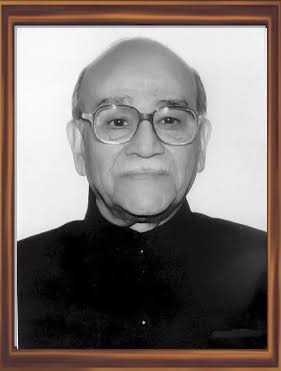
Professor Jayant Vishnu Narlikar (19 July 1938 – 20 May 2025) was one of India’s most distinguished astrophysicists, cosmologists and science communicators. He became internationally known for his work on cosmology and for developing, with British astronomer Fred Hoyle, the Hoyle–Narlikar theory of gravity.
Narlikar was notable not only for his scientific research but also for his willingness to question established ideas. He advocated alternative cosmological models to the widely accepted Big Bang theory, including steady-state and later quasi-steady-state cosmology. His research covered gravitation, Mach’s Principle, quantum cosmology, quasars, black holes and other areas of theoretical astrophysics.
He was also an outstanding science communicator. Through books, articles, radio and television programmes, he explained complicated scientific ideas to ordinary readers in accessible language. He wrote science-fiction works as well as scientific and popular-science books.
One of his greatest institutional achievements was founding the Inter-University Centre for Astronomy and Astrophysics (IUCAA) in Pune. He served as its founding director from 1988 until 2003 and helped establish it as a major centre for astronomy and astrophysics in India.
Narlikar received numerous national and international honours, including the Padma Bhushan (1965), Padma Vibhushan (2004), Maharashtra Bhushan, Sahitya Akademi Award (2014) and, posthumously, the Vigyan Ratna (2025) under the Rashtriya Vigyan Puraskar.
2. Quick Facts
| Particular | Information |
|---|---|
| Full Name | Jayant Vishnu Narlikar |
| Known As | Jayant Narlikar / Prof. J. V. Narlikar |
| Date of Birth | 19 July 1938 |
| Place of Birth | Kolhapur, Maharashtra, India |
| Date of Death | 20 May 2025 |
| Place of Death | Pune, Maharashtra, India |
| Nationality | Indian |
| Profession | Astrophysicist, cosmologist, physicist, author and science communicator |
| Field of Achievement | Science, astrophysics, cosmology and science communication |
| Alma Mater | Banaras Hindu University; University of Cambridge |
| Doctoral Adviser | Fred Hoyle |
| Major Institution | Tata Institute of Fundamental Research |
| Major Institution Founded | Inter-University Centre for Astronomy and Astrophysics (IUCAA) |
| IUCAA Director | 1988–2003 |
| Major Theory | Hoyle–Narlikar theory of gravity |
| Major National Honours | Padma Bhushan, Padma Vibhushan, Vigyan Ratna |
| Major Literary Honour | Sahitya Akademi Award, 2014 |
| Spouse | Mangala Narlikar |
| Children | Three daughters |
Narlikar was born in Kolhapur to mathematician and theoretical physicist Vishnu Vasudev Narlikar and Sanskrit scholar Sumati Narlikar.
3. Award Information
Jayant Narlikar received several major honours during his lifetime. His most important national awards are listed below.
A. Padma Bhushan – 1965
| Award Detail | Information |
| Award Name | Padma Bhushan |
| Award Year | 1965 |
| Category/Field | Science and Engineering |
| Presented By | President of India |
| Awardee | Dr. Jayant Vishnu Narlikar |
| Age at Award | 26 |
| Reason | Recognition of his outstanding contribution to science |
The official Gazette of India notification dated 26 January 1965 lists Dr. Jayant Vishnu Narlikar, King’s College, Cambridge among the Padma Bhushan awardees.
He was only 26 years old, making the honour particularly remarkable. IUCAA describes this as recognition of his outstanding contributions to science.
B. Padma Vibhushan – 2004
| Award Detail | Information |
| Award Name | Padma Vibhushan |
| Award Year | 2004 |
| Category/Field | Science and Engineering |
| Presented By | President of India |
| Importance | India’s second-highest civilian honour |
Narlikar received the Padma Vibhushan in 2004 for his scientific research and contributions to astrophysics and cosmology.
C. Sahitya Akademi Award – 2014
Narlikar was also an accomplished Marathi writer. He received the Sahitya Akademi Award in Marathi in 2014 for his autobiography Chaar Nagarantale Maze Vishwa (“My World in Four Cities”). Sahitya Akademi described it as an outstanding autobiography of an introspective scientist.
D. Vigyan Ratna – 2025
| Award Detail | Information |
| Award | Vigyan Ratna |
| Award Programme | Rashtriya Vigyan Puraskar |
| Year | 2025 |
| Field | Physics |
| Nature | Posthumous |
| Reason | Lifetime achievement and contributions to science and technology |
| Presented By | President of India |
| Ceremony | 23 December 2025 |
| Venue | Rashtrapati Bhavan, New Delhi |
The Government of India announced Narlikar as the Vigyan Ratna 2025 awardee in Physics, posthumously. The Vigyan Ratna category recognises lifetime achievements and contributions in science and technology.
The award was formally conferred posthumously at Rashtrapati Bhavan on 23 December 2025 by President Droupadi Murmu.
Why was he honoured with the Vigyan Ratna?
The honour recognised Narlikar’s lifetime contribution to astrophysics and cosmology, including his pioneering theoretical work, institution-building and efforts to promote scientific thinking and science education.
4. Why Did Jayant Narlikar Receive These Awards?
Jayant Narlikar’s awards reflected different dimensions of his remarkable career.
He was honoured for:
- Pioneering research in cosmology and astrophysics.
- Development of the Hoyle–Narlikar theory of gravity.
- Research involving gravitation and Mach’s Principle.
- Work on alternative cosmological models.
- Contributions to theoretical astrophysics.
- Establishing and developing IUCAA.
- Promoting astronomy and astrophysics research in Indian universities.
- Making science accessible to the general public.
- Writing popular-science and science-fiction books.
- Contributing to Marathi literature.
His career combined scientific research, institution-building, writing and public science communication.
5. Early Life
Jayant Vishnu Narlikar was born on 19 July 1938 in Kolhapur, Maharashtra.
He came from an academically distinguished family. His father, Vishnu Vasudev Narlikar, was a mathematician and theoretical physicist who served as a professor and head of the Mathematics Department at Banaras Hindu University. His mother, Sumati Narlikar, was a Sanskrit scholar.
Narlikar grew up in the academic environment of Banaras Hindu University in Varanasi, where his father’s career was based. This environment played an important role in developing his early interest in mathematics and science.
From an early age, he demonstrated exceptional ability in mathematics and science.
6. Education
Narlikar’s education began at Central Hindu College in Varanasi.
He subsequently studied at Banaras Hindu University (BHU) and obtained his B.Sc. degree in 1957.
Cambridge University
Narlikar then travelled to the University of Cambridge for higher studies.
At Cambridge, he studied mathematics while specialising in astronomy and astrophysics. He achieved exceptional academic distinctions, becoming a Wrangler and Tyson Medallist in the Mathematical Tripos.
His Cambridge degrees included:
- B.A. – 1960
- Ph.D. – 1963
- M.A. – 1964
- Sc.D. – 1976
He also received the Smith’s Prize in 1962 and later the Adams Prize in 1967.
His doctoral research was conducted under the supervision of the famous British astronomer Fred Hoyle.
This association became extremely important to modern cosmology because Narlikar and Hoyle subsequently developed the Hoyle–Narlikar theory of gravity.
7. Career Journey
Cambridge Years
After completing his doctorate, Narlikar continued his research career at Cambridge.
He was a Fellow of King’s College, Cambridge, from 1963 to 1972 and was also a founding staff member of the Institute of Theoretical Astronomy from 1966 to 1972.
During this period, he worked closely with Fred Hoyle and developed the foundations of his research in cosmology and astrophysics.
Tata Institute of Fundamental Research
Narlikar returned to India in 1972 and joined the Tata Institute of Fundamental Research (TIFR), Mumbai.
He remained at TIFR until 1989, and under his leadership the Theoretical Astrophysics Group expanded and gained international recognition.
Founding IUCAA
One of Narlikar’s greatest contributions to Indian science came in the 1980s.
The University Grants Commission invited him to establish the Inter-University Centre for Astronomy and Astrophysics (IUCAA) in Pune. He became its founding director in 1988.
He remained director until 2003.
His goal was to create a national centre that could strengthen astronomy and astrophysics research at Indian universities. IUCAA eventually became an internationally respected centre for teaching and research in these fields.
Science Communication
Narlikar believed that scientists had a responsibility to communicate science to society.
He wrote popular-science books, articles and science-fiction stories and regularly appeared on radio and television.
He also contributed to science education and served as a consultant for NCERT science and mathematics textbooks.
8. Major Achievements
1. Hoyle–Narlikar Theory of Gravity
Narlikar and Fred Hoyle developed a theory of gravity that incorporated ideas associated with Mach’s Principle and attempted to explain gravity and matter creation within a cosmological framework.
Their work became one of Narlikar’s most important scientific contributions.
2. Alternative Cosmology
Narlikar was one of the best-known scientific advocates of cosmological models alternative to the standard Big Bang model.
He worked on:
- Steady-state cosmology
- Quasi-steady-state cosmology
- Gravitation
- Mach’s Principle
- Quantum cosmology
- Action-at-a-distance physics
3. Research on Quasars and Black Holes
His research also addressed quasars, black holes and the oldest stars in the Universe.
4. Founded IUCAA
Narlikar was the founding director of IUCAA and helped establish it as a leading Indian institution for astronomy and astrophysics.
5. High-Altitude Balloon Experiments
Narlikar led a multi-institutional programme that collected atmospheric samples from altitudes reaching approximately 41 kilometres to investigate the possible presence of microorganisms in the upper atmosphere.
Samples collected during missions in 2001 and 2005 were reported to contain viable cells and bacteria. The findings were interpreted as raising questions about the possible arrival of microorganisms from space, although the broader interpretation remains scientifically debated.
6. Popularised Science
He was one of India’s most influential science communicators.
He used books, lectures, television and radio to explain astronomy and cosmology to non-specialist audiences.
7. Marathi Literature
Narlikar also became a respected Marathi writer. His autobiography Chaar Nagarantale Maze Vishwa received the Sahitya Akademi Award in 2014.
8. Vigyan Ratna
In 2025, after his death, the Government of India honoured him with the Vigyan Ratna, recognising his lifetime contribution to science and technology.
9. Contribution to the Nation
Jayant Narlikar made important contributions to India in several areas.
Scientific Research
His work helped establish Indian cosmology and theoretical astrophysics as internationally visible research fields.
Institution Building
His greatest institutional contribution was IUCAA.
He created an institution designed to connect researchers and universities across India and encourage astronomy and astrophysics research outside a few traditional research centres.
Science Education
Narlikar believed that scientific knowledge should reach school students and the wider public.
He participated in public outreach programmes and contributed to educational material.
Scientific Temper
He strongly supported evidence-based thinking and publicly challenged pseudoscientific claims.
Literature
Through his Marathi autobiography and science-fiction writing, he demonstrated that scientific thinking and literature could complement each other.
Inspiration for Young Scientists
Perhaps his most enduring contribution was the inspiration he provided to generations of Indian students interested in astronomy, physics and mathematics.
10. Other Awards and Honours
Jayant Narlikar received numerous national and international honours.
| Year | Award/Honour |
| 1962 | Smith’s Prize, Cambridge |
| 1965 | Padma Bhushan |
| 1967 | Adams Prize |
| 1978 | Shanti Swarup Bhatnagar Award |
| 1981 | Rashtra Bhushan |
| 1989 | Atmaram Award |
| 1990 | Indira Gandhi Award, Indian National Science Academy |
| 1996 | UNESCO Kalinga Prize for popularisation of science |
| 2004 | Padma Vibhushan |
| 2004 | Prix Janssen, French Astronomical Society |
| 2010 | Maharashtra Bhushan |
| 2012 | TWAS Prize for setting up a centre of excellence in science |
| 2014 | Sahitya Akademi Award |
| 2025 | Vigyan Ratna, posthumously |
IUCAA’s biographical record confirms many of these honours, including the Padma awards, Adams Prize, Shanti Swarup Bhatnagar Award, Kalinga Prize, Prix Janssen and Sahitya Akademi Award.
11. Legacy and Influence
Jayant Narlikar’s legacy extends far beyond his scientific papers.
His most important institutional legacy is IUCAA, which continues to serve as a major centre for astronomy and astrophysics research and education in India.
His scientific legacy lies in his willingness to investigate unconventional ideas. Even though the standard Big Bang model became dominant in cosmology, Narlikar continued to investigate alternative explanations and encouraged scientists to examine assumptions critically.
His other major legacy is science communication.
He showed that a scientist could communicate sophisticated ideas without making them inaccessible to ordinary readers. Through books, lectures, television appearances and fiction, he helped make astronomy part of popular intellectual culture in India.
His influence was also personal. IUCAA colleagues have described him as a mentor who inspired many young scientists and helped shape the careers of researchers who later became leaders in astrophysics and cosmology.
12. Interesting Facts
- Jayant Narlikar was born on 19 July 1938 in Kolhapur.
- His father was a mathematician and theoretical physicist, while his mother was a Sanskrit scholar.
- He completed his B.Sc. from Banaras Hindu University in 1957.
- He became a Wrangler at Cambridge in the Mathematical Tripos.
- He won the Smith’s Prize in 1962.
- He received the Padma Bhushan in 1965 at only 26 years of age.
- His doctoral adviser was the famous astronomer Fred Hoyle.
- He received the Adams Prize in 1967.
- He returned to India in 1972 and joined TIFR.
- He became the founding director of IUCAA in 1988.
- He served as IUCAA’s director until 2003.
- He was also a successful Marathi writer.
- His autobiography won the Sahitya Akademi Award in 2014.
- He wrote science-fiction stories in addition to scientific books.
- He worked on experiments involving atmospheric samples collected from altitudes of up to 41 km.
- He strongly promoted scientific temper and evidence-based thinking.
- He was honoured with the Vigyan Ratna posthumously in 2025.
- He died peacefully in his sleep at his Pune residence on 20 May 2025, according to IUCAA’s tribute page.
13. Quotes
One of the most frequently cited ideas associated with Narlikar concerned the responsibility of scientists to communicate their work to society.
IUCAA’s tribute material records his view that “doing science is our duty” and that communicating science to people is an even greater responsibility.
Another memorable aspect of his interaction with the public was his encouragement of curiosity. According to a tribute published by IUCAA, when people asked him for autographs, he sometimes asked them instead to send him a postcard with a science question that had puzzled them, and he would respond personally.
These examples capture an important part of Narlikar’s philosophy: science should not remain confined to laboratories and universities; it should stimulate curiosity throughout society.
14. Timeline
| Year | Event |
| 1938 | Born on 19 July in Kolhapur |
| 1957 | Received B.Sc. from Banaras Hindu University |
| 1960 | Received B.A. from Cambridge |
| 1962 | Won the Smith’s Prize |
| 1963 | Received Ph.D. from Cambridge |
| 1963–1972 | Fellow of King’s College, Cambridge |
| 1964 | Received M.A. from Cambridge |
| 1965 | Received Padma Bhushan |
| 1966 | Married Mangala Rajwade |
| 1967 | Received Adams Prize |
| 1972 | Returned to India and joined TIFR |
| 1976 | Received Sc.D. from Cambridge |
| 1978 | Received Shanti Swarup Bhatnagar Award |
| 1988 | Became founding director of IUCAA |
| 1990 | Received Indira Gandhi Award |
| 1996 | Received UNESCO Kalinga Prize |
| 2003 | Retired as IUCAA Director |
| 2004 | Received Padma Vibhushan and Prix Janssen |
| 2010 | Maharashtra Bhushan |
| 2014 | Received Sahitya Akademi Award |
| 2021 | Presided over the 94th Akhil Bharatiya Marathi Sahitya Sammelan |
| 2025 | Died on 20 May in Pune |
| 2025 | Posthumously awarded Vigyan Ratna |
The Cambridge, TIFR and IUCAA career dates are documented in Narlikar’s biographical record maintained by IUCAA.
15. References
1. Inter-University Centre for Astronomy and Astrophysics (IUCAA)
IUCAA’s official biography and tribute pages are among the most useful sources for Narlikar’s education, career, research, awards and institutional contributions.
2. Government of India – Padma Awards
The official Padma Awards records and the 1965 Gazette confirm his Padma Bhushan award.
3. Government of India – Rashtriya Vigyan Puraskar
The Press Information Bureau confirms his selection for the 2025 Vigyan Ratna and its posthumous conferral at Rashtrapati Bhavan.
4. Sahitya Akademi
Sahitya Akademi records confirm Narlikar’s 2014 Marathi Sahitya Akademi Award for his autobiography Chaar Nagarantale Maze Vishwa.
5. IUCAA Tribute Archive
IUCAA’s tribute archive contains recollections from colleagues and scientists about Narlikar’s scientific career, mentoring and science communication.
16. Related Personalities
For internal links on your blog, you can create related articles about:
- Fred Hoyle – British astronomer and Narlikar’s doctoral adviser and collaborator.
- Vishnu Vasudev Narlikar – Narlikar’s father and mathematician/theoretical physicist.
- Mangala Narlikar – mathematician and Narlikar’s wife.
- Subrahmanyan Chandrasekhar – Nobel Prize-winning Indian-American astrophysicist.
- Meghnad Saha – pioneering Indian astrophysicist.
- Homi J. Bhabha – founder of TIFR.
- Vikram Sarabhai – pioneering Indian space scientist.
- Satyendra Nath Bose – legendary Indian physicist.
- Abdus Salam – Nobel Prize-winning theoretical physicist.
- T. Padmanabhan – prominent Indian theoretical physicist and cosmologist associated with IUCAA.
- Raghunath Mashelkar – Indian scientist and science administrator who has spoken about Narlikar’s influence.
- Girish Karnad – Indian writer and intellectual whose work can be linked through the theme of science, literature and public intellectual life.
17. Frequently Asked Questions (FAQ)
Who was Jayant Narlikar?
Jayant Vishnu Narlikar was an internationally recognised Indian astrophysicist, cosmologist, author and science communicator known especially for his work on alternative cosmological models and the Hoyle–Narlikar theory of gravity.
When was Jayant Narlikar born?
He was born on 19 July 1938 in Kolhapur, Maharashtra.
When did Jayant Narlikar die?
He died on 20 May 2025 at his residence in Pune.
What was Jayant Narlikar famous for?
He was famous for his contributions to cosmology, especially the Hoyle–Narlikar theory of gravity, alternative cosmological models, and his work in science communication.
Who was Jayant Narlikar’s mentor?
His doctoral adviser at Cambridge was the renowned British astronomer Fred Hoyle.
What is the Hoyle–Narlikar theory?
It is a theory of gravity developed by Fred Hoyle and Jayant Narlikar that incorporates ideas related to Mach’s Principle and matter creation in cosmology.
Where did Jayant Narlikar study?
He studied at Banaras Hindu University and later at the University of Cambridge, where he specialised in mathematics, astronomy and astrophysics.
When did Jayant Narlikar receive the Padma Bhushan?
He received the Padma Bhushan in 1965, when he was only 26 years old. The official 1965 Gazette lists him as Dr. Jayant Vishnu Narlikar of King’s College, Cambridge.
When did he receive the Padma Vibhushan?
He received the Padma Vibhushan in 2004.
What was Jayant Narlikar’s most important institution?
He was the founding director of the Inter-University Centre for Astronomy and Astrophysics (IUCAA) in Pune.
When was IUCAA established?
Narlikar was invited to establish IUCAA in the 1980s and became its founding director in 1988.
What was Jayant Narlikar’s contribution to science communication?
He wrote popular-science books and science fiction, gave public lectures and appeared on radio and television to explain scientific concepts to non-specialist audiences.
Did Jayant Narlikar receive a literary award?
Yes. He received the Sahitya Akademi Award in 2014 in Marathi for his autobiography Chaar Nagarantale Maze Vishwa.
What is Jayant Narlikar’s most important literary work?
His autobiography Chaar Nagarantale Maze Vishwa is one of his best-known literary works and won the Sahitya Akademi Award in 2014.
Did Jayant Narlikar receive the Vigyan Ratna?
Yes. He was awarded the Vigyan Ratna in 2025 posthumously under the Rashtriya Vigyan Puraskar.
When was the Vigyan Ratna awarded to Jayant Narlikar?
The award was formally conferred posthumously at Rashtrapati Bhavan on 23 December 2025 by President Droupadi Murmu.
Why was Jayant Narlikar awarded the Vigyan Ratna?
The Vigyan Ratna recognises lifetime achievements and contributions in science and technology. Narlikar was honoured for his lifetime contribution to astrophysics, cosmology and scientific advancement.
Did Jayant Narlikar support the Big Bang theory?
Narlikar was well known for advocating alternative cosmological models and challenging the dominance of the standard Big Bang model. He worked on steady-state and quasi-steady-state cosmology.
Did Jayant Narlikar write science fiction?
Yes. In addition to scientific and popular-science books, he wrote science-fiction stories with Indian themes and settings.
What is Jayant Narlikar’s legacy?
His legacy combines scientific research, institution-building, science communication and literature. IUCAA, his cosmological research, his popular-science writings and his influence on generations of Indian students and scientists are central parts of that legacy.
About the Author