

1. Introduction
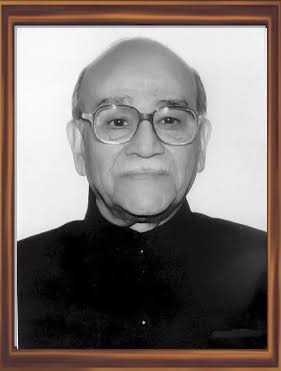
Professor Mohammad Mujeeb (30 October 1902 – 20 January 1985) was an eminent Indian historian, educationist, scholar and writer in English and Urdu. He is particularly remembered for his long association with Jamia Millia Islamia, where he served as Vice-Chancellor from 1948 to 1973, one of the longest tenures in the university’s history.
Mujeeb was part of the group of intellectuals associated with the development of Jamia in its formative years. He joined the institution in 1926, along with Dr. Zakir Husain and Dr. Abid Husain, after the three had been studying in Europe. Jamia’s official history describes him as an Oxford scholar in history and a student of printing in Germany.
As a historian and writer, Mujeeb produced important works on Indian society, Islam, education, literature and culture. His best-known book, The Indian Muslims, examined the history and social and cultural life of Indian Muslims from the early period to the modern era.
The Government of India honoured him with the Padma Bhushan in 1965, in the field of Literature and Education.
2. Quick Facts
| Particular | Information |
|---|---|
| Full Name | Mohammad Mujeeb |
| Also Known As | Prof. Mohammad Mujeeb / Dr. Mohammad Mujeeb |
| Born | 30 October 1902 |
| Place of Birth | Lucknow, Uttar Pradesh, India |
| Died | 20 January 1985 |
| Place of Death | New Delhi, India |
| Nationality | Indian |
| Profession | Historian, educationist, scholar and writer |
| Languages | Urdu, English, German, French and Russian, among others |
| Field of Achievement | Literature and Education |
| Institution Most Associated With | Jamia Millia Islamia |
| Joined Jamia | 1926 |
| Vice-Chancellor of Jamia | 1948–1973 |
| Years Active | From 1926 until his death |
| Major Award | Padma Bhushan |
| Padma Bhushan Year | 1965 |
| Padma Bhushan Field | Literature and Education |
| Best-Known Work | The Indian Muslims |
The date and place of birth are given by the Sahitya Akademi’s Makers of Indian Literature profile, while Jamia’s official history confirms his 1926 joining and 1948–1973 Vice-Chancellorship.
3. Award Information
Padma Bhushan – 1965
| Award Detail | Information |
| Award Name | Padma Bhushan |
| Award Category | Literature and Education |
| Award Year | 1965 |
| Recipient Name in Official Database | Prof. Mohd Mujeeb |
| Location in Padma Database | Delhi |
| Presented By | President of India |
| Official Field | Literature and Education |
| Official Notification | 1965 |
| Citation/Reason | Contribution to literature and education |
The Government of India’s official Padma Awards database lists “Prof. Mohd Mujeeb” as a Padma Bhushan (1965) recipient in Literature and Education, with Delhi as the place associated with the award.
The Sahitya Akademi’s biographical monograph states that the Government of India honoured Mujeeb with the Padma Bhushan in 1965 for his contribution to literature and education.
Previous Recipients
The Padma Bhushan was already being awarded to distinguished Indians before 1965. Because the award is presented across many fields and to multiple recipients each year, there is no single “previous recipient” for Mujeeb’s award.
Next Recipients
Likewise, the Padma Bhushan is a recurring national honour rather than a single annual title with one successor. Therefore, a specific “next recipient” does not apply to Mujeeb’s award.
4. Why Did Mohammad Mujeeb Receive the Award?
Mohammad Mujeeb received the Padma Bhushan in 1965 for his contribution to Literature and Education.
His recognition reflected several decades of work:
- Teaching and scholarship in history.
- Development of Jamia Millia Islamia as an educational institution.
- His long service as Jamia’s Vice-Chancellor.
- His writings in English and Urdu.
- His work on Indian history, society, culture and education.
- His contribution to national educational and cultural institutions.
The Sahitya Akademi describes him as an eminent historian, educationist and scholar, noting that he served Jamia from 1926 and was its Vice-Chancellor from 1948 to 1973.
5. Early Life
Mohammad Mujeeb was born on 30 October 1902 in Lucknow, Uttar Pradesh, into a prominent family. His father, Mohammad Naseem, was a wealthy barrister in Lucknow.
His family background gave him access to a strong education, but Mujeeb’s later career was shaped particularly by his exposure to European academic and intellectual traditions.
While studying in Europe, he became closely associated with Zakir Husain and Abid Husain. The three eventually made a shared decision to devote themselves to Jamia Millia Islamia.
Jamia’s official history records that in 1925 the three friends were studying in Germany and decided to serve Jamia. They returned to India in early 1926 and joined the institution.
This decision became one of the defining moments of Mujeeb’s life.
6. Education
Mujeeb received a high-quality education in India and Europe.
Study of History at Oxford
He studied History at Oxford University, where he developed the academic foundation for his later career as a historian and educationist. Jamia’s official profile specifically identifies him as an Oxford scholar in History.
Training in Germany
After Oxford, Mujeeb went to Germany to study printing.
During this period he became closely associated with Zakir Husain and Abid Husain. His German experience exposed him to European educational methods, printing technology and intellectual life.
His education therefore combined:
- History
- European intellectual traditions
- Printing and publishing
- Languages
- Education
The Sahitya Akademi notes that Mujeeb mastered several languages, including Urdu, English, Russian, German and French.
7. Career Journey
Joining Jamia Millia Islamia
Mujeeb joined Jamia Millia Islamia in 1926 along with Zakir Husain and Abid Husain.
Jamia was then still developing as a national educational institution. Its founders sought to create an educational environment based on Indian languages, cultural pluralism and national independence from colonial educational models.
Mujeeb became deeply involved in this educational experiment.
Professor of History
Mujeeb worked as a professor of history at Jamia and became an important figure in the institution’s intellectual life.
The university’s Department of History and Culture notes that historians including Mujeeb played an important role in developing the teaching and writing of the social and cultural history of medieval India.
Vice-Chancellor of Jamia
In 1948, following Zakir Husain’s departure from the position, Mujeeb became Vice-Chancellor of Jamia Millia Islamia.
He remained in the position until 1973, serving approximately 25 years. Jamia describes this as one of the longest Vice-Chancellor tenures in its history.
During his tenure, Jamia experienced considerable academic and infrastructural development.
According to the Sahitya Akademi’s study, his tenure included the expansion of buildings, staff facilities, higher-education infrastructure, the library, science facilities and teacher-training facilities.
Work in National Institutions
Mujeeb’s activities extended beyond Jamia.
He was associated with several national organisations, including:
- Hindustani Talimi Sangh
- Sahitya Akademi
- Taraqqui Urdu Board
- National Integration Committee
- National Integration Council
He also served on government committees dealing with educational and social questions.
International Representation
Mujeeb represented India at several international forums.
The Sahitya Akademi biography records that he represented the Government of India at the United Nations General Assembly in 1949 and represented India at a UNESCO meeting in 1954. He also travelled to countries including China, Russia, Yugoslavia, Turkey, the United Kingdom and the United States.
8. Major Achievements
1. Longest-Serving Jamia Vice-Chancellor of His Era
Mujeeb served as Vice-Chancellor from 1948 to 1973, making his tenure one of the longest in Jamia’s history.
2. Strengthened Jamia’s Educational Infrastructure
During his tenure, Jamia developed its infrastructure and introduced new academic and technical courses.
3. Major Historian and Writer
He wrote extensively about Indian history, society, Islam, education and culture.
4. Author of The Indian Muslims
His major scholarly work, The Indian Muslims, examined Indian Muslim history and society from the early period through the modern era.
5. Wrote in English and Urdu
Mujeeb was a prolific writer in both English and Urdu. His literary output included history, biography, essays, plays and other forms of writing.
6. Contributed to National Integration
He was involved with national integration initiatives and served on government bodies concerned with education, social issues and national unity.
7. International Representative
He represented India at international institutions including the UN General Assembly and UNESCO.
8. Received the Padma Bhushan
The Government of India awarded him the Padma Bhushan in 1965 for Literature and Education.
9. Contribution to the Nation
Mohammad Mujeeb’s contribution to India was primarily in the fields of education, literature, history and institution-building.
Contribution to Education
His quarter-century leadership of Jamia Millia Islamia helped consolidate the institution after independence.
During his Vice-Chancellorship, Jamia developed new academic and technical programmes and expanded its physical infrastructure.
Contribution to History
Mujeeb encouraged the study of India’s social and cultural history. Jamia’s history department identifies him among the scholars who helped develop the teaching and writing of medieval Indian social and cultural history.
Contribution to Literature
His books and essays addressed Indian society, religion, education and culture. His writing crossed linguistic boundaries between English and Urdu.
Contribution to National Integration
Mujeeb participated in national integration initiatives and was associated with organisations working on education, language and cultural development.
International Contribution
His participation in UNESCO, the United Nations and international delegations helped represent India’s intellectual and educational perspectives abroad.
10. Other Awards and Honours
Padma Bhushan – 1965
This was Mujeeb’s most prominent national civilian honour. It was awarded in Literature and Education.
Academic and Institutional Recognition
Mujeeb was also associated with major national institutions, including the Sahitya Akademi and Hindustani Talimi Sangh.
Mohammad Mujeeb Memorial Lecture
Jamia Millia Islamia has commemorated his contribution through the Professor Mohammad Mujeeb Memorial Lecture. His continuing association with Jamia is part of the institution’s historical memory.
11. Legacy and Influence
Mohammad Mujeeb’s legacy is closely connected with Jamia Millia Islamia and modern Indian intellectual history.
His greatest institutional legacy was his 25-year leadership of Jamia. He helped consolidate the university after independence while maintaining its educational and cultural identity.
His literary legacy is equally important.
His book The Indian Muslims remains one of his best-known works. Rather than treating Indian Muslims as a simple homogeneous group, the book examines different historical, political, religious, artistic and social dimensions of their experience.
His writings also reflected his interest in:
- Indian pluralism
- Education
- Cultural identity
- Religion and society
- Literature
- National integration
The Sahitya Akademi describes Mujeeb as committed to a secular and democratic ethos and identifies his literary and educational work as central to his contribution to India.
12. Interesting Facts
- Mohammad Mujeeb was born on 30 October 1902 in Lucknow.
- His father, Mohammad Naseem, was a wealthy barrister from Lucknow.
- He studied History at Oxford University.
- He studied printing in Germany before returning to India.
- He joined Jamia Millia Islamia in 1926.
- He became Jamia’s Vice-Chancellor in 1948.
- He remained Vice-Chancellor until 1973, giving him roughly 25 years in the position.
- He was proficient in several languages, including Urdu, English, German, French and Russian.
- He represented the Government of India at the United Nations General Assembly in 1949.
- He represented India at UNESCO in 1954.
- His major book The Indian Muslims was first published in English in 1967.
- He wrote both English and Urdu literature, including plays and historical works.
- He was associated with the Sahitya Akademi.
- He was involved in the development of the Taraqqui Urdu Board.
- The Government of India awarded him the Padma Bhushan in 1965.
- A Sahitya Akademi monograph titled Mohammad Mujeeb was written by Meher Fatima Hussain and published as part of the Makers of Indian Literature series.
13. Quotes
Reliable, directly sourced quotations by Mohammad Mujeeb are less readily available online than biographical information about him.
For a factual blog, it is therefore better not to attribute popular motivational statements to him without a primary source.
One documented idea associated with his educational philosophy was his commitment to developing Jamia as an institution rooted in Indian cultural and educational values while remaining open to international intellectual traditions.
His writings themselves are the best source for understanding his views on education, Indian society, religion and culture.
14. Timeline
| Year | Event |
| 1902 | Born on 30 October in Lucknow |
| Early 20th century | Received his early education in India |
| 1920s | Studied History at Oxford |
| 1920s | Went to Germany to study printing |
| 1925 | Along with Zakir Husain and Abid Husain, decided to serve Jamia |
| 1926 | Joined Jamia Millia Islamia |
| 1948 | Became Vice-Chancellor of Jamia |
| 1949 | Represented India at the United Nations General Assembly |
| 1951 | Travelled to China as part of an Indo-China Friendship Committee delegation |
| 1954 | Represented the Government of India at UNESCO |
| 1955 | Appointed Joint Secretary of the Central Religious Educational Board |
| 1962 | Nominated to the National Integration Committee |
| 1965 | Received the Padma Bhushan for Literature and Education |
| 1967 | The Indian Muslims published in English |
| 1973 | Retired as Vice-Chancellor of Jamia |
| 1985 | Died on 20 January in New Delhi |
| 2016/2017 | Sahitya Akademi published Meher Fatima Hussain’s monograph on Mujeeb |
The major career dates are supported particularly strongly by Jamia Millia Islamia and Sahitya Akademi records.
15. References
1. Government of India – Padma Awards Database
The official Padma Awards database records:
Prof. Mohd Mujeeb — Padma Bhushan — 1965 — Literature and Education — Delhi.
2. Jamia Millia Islamia – History
Jamia’s official history provides important information about Mujeeb’s joining the institution in 1926 and his association with Zakir Husain and Abid Husain.
3. Jamia Millia Islamia – Past Vice-Chancellors
Jamia’s official profile records Mujeeb as Vice-Chancellor from 1948 to 1973 and provides information about his Oxford education and study of printing in Germany.
4. Sahitya Akademi – Makers of Indian Literature: Mohammad Mujeeb
The Sahitya Akademi monograph by Meher Fatima Hussain is an important biographical source covering Mujeeb’s life, education, literary work, institutional career and national activities.
5. Google Books – The Indian Muslims
The bibliographic record for Mujeeb’s major work provides details about the book’s subject and structure.
6. Rekhta
Rekhta’s author profile and catalogue document Mujeeb’s Urdu writings and identify him as a prominent historian, scholar and educationist.
16. Related Personalities
For internal links on your blog, you can create related articles about:
- Dr. Zakir Husain – close colleague of Mujeeb and Vice-Chancellor of Jamia before him; later the third President of India.
- Dr. Abid Husain – educationist and one of Mujeeb’s colleagues in the formative years of Jamia.
- Hakim Ajmal Khan – an important founder and first Chancellor of Jamia.
- Maulana Mohammad Ali Jauhar – one of Jamia’s founders and its first Vice-Chancellor.
- Abdul Majeed Khwaja – early Vice-Chancellor and important figure in Jamia’s development.
- Meher Fatima Hussain – author of the Sahitya Akademi monograph on Mohammad Mujeeb.
- Mushirul Hasan – later Vice-Chancellor of Jamia and historian.
- Mohammad Habib – historian and member of the broader intellectual circle associated with Indian Muslim history.
- Irfan Habib – prominent historian and nephew of Mohammad Habib.
- Humayun Kabir – educationist, writer and public figure who worked on educational and national issues.
17. Frequently Asked Questions (FAQ)
Who was Mohammad Mujeeb?
Mohammad Mujeeb was an Indian historian, educationist, scholar and writer who served as Vice-Chancellor of Jamia Millia Islamia from 1948 to 1973.
When was Mohammad Mujeeb born?
He was born on 30 October 1902 in Lucknow, Uttar Pradesh.
When did Mohammad Mujeeb die?
He died on 20 January 1985 in New Delhi.
What was Mohammad Mujeeb famous for?
He was best known for his long leadership of Jamia Millia Islamia, his scholarship in history and education, and his writings in English and Urdu.
When did Mohammad Mujeeb join Jamia Millia Islamia?
He joined Jamia in 1926, along with Zakir Husain and Abid Husain.
When was Mohammad Mujeeb the Vice-Chancellor of Jamia?
He served as Vice-Chancellor from 1948 to 1973.
Which award did Mohammad Mujeeb receive?
He received the Padma Bhushan in 1965.
Why did Mohammad Mujeeb receive the Padma Bhushan?
He was honoured for his contribution to Literature and Education.
What was Mohammad Mujeeb’s field of achievement?
The Government of India’s Padma database places his award in Literature and Education.
What was Mohammad Mujeeb’s most famous book?
His best-known work is The Indian Muslims, a major study of the history and social and cultural life of Indian Muslims.
What languages did Mohammad Mujeeb know?
The Sahitya Akademi biography states that he mastered several languages, including Urdu, English, Russian, German and French.
Did Mohammad Mujeeb represent India internationally?
Yes. He represented India at international forums including the United Nations General Assembly and UNESCO and travelled to several countries as part of official delegations.
Was Mohammad Mujeeb associated with the Sahitya Akademi?
Yes. He was a member of the Sahitya Akademi and was involved in several other national cultural and educational organisations.
What did Mohammad Mujeeb contribute to Jamia?
During his 25-year Vice-Chancellorship, he helped expand Jamia’s infrastructure and academic and technical programmes while maintaining the institution’s educational character.
Did Mohammad Mujeeb write in Urdu?
Yes. He wrote extensively in both Urdu and English, including books, essays, plays and other literary works.
What is Mohammad Mujeeb’s legacy?
His legacy lies primarily in Indian education, historical scholarship, Urdu and English literature, Jamia Millia Islamia and national cultural development. His long leadership of Jamia and his book The Indian Muslims remain central to his reputation.
About the Author