

1. Introduction
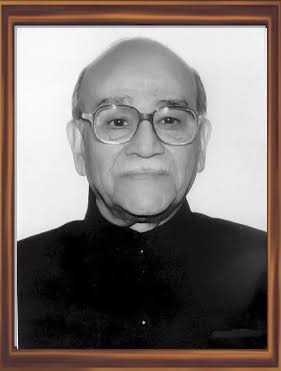
Narasinh Narayan Godbole (28 December 1887 – 4 December 1984) was an Indian academic, food chemist, industrial-chemistry educator and public administrator. He played an important role in the development of industrial chemistry education in India and served as the first Director of Industries & Supplies of the Government of Rajasthan.
Godbole was closely associated with Banaras Hindu University (BHU), where he helped establish the Department of Industrial Chemistry and later became the first principal of its College of Technology. He also undertook advanced studies in Germany and earned a PhD from Berlin University in 1925.
His work covered industrial chemistry, food science, milk products, fats and oils, soaps, industrial development and education. In recognition of his contributions, the Government of India awarded him the Padma Bhushan in 1965. The official Padma Awards database places his award in the category Literature and Education.
2. Quick Facts
| Detail | Information |
|---|---|
| Full Name | Narasinh Narayan Godbole |
| Native Name | नरसिंह नारायण गोडबोले |
| Also Known As | N. N. Godbole |
| Date of Birth | 28 December 1887 |
| Place of Birth | Dharwad |
| Nationality | Indian |
| Profession | Food chemist, professor, industrial-chemistry educator and public administrator |
| Field of Achievement | Education, industrial chemistry, food science and public administration |
| Major Institution | Banaras Hindu University |
| Important Government Position | First Director of Industries & Supplies, Government of Rajasthan |
| Years Active | Approximately 1911–1959 in documented academic and administrative positions |
| Major Award | Padma Bhushan |
| Award Year | 1965 |
| Date of Death | 4 December 1984 |
| Place of Death | Pune, India |
Biographical sources record his birth in Dharwad and his death in Pune at the age of 96.
3. Award Information
Padma Bhushan – 1965
Award Name
Padma Bhushan
The Padma Bhushan is one of India’s Padma civilian honours.
Award Category
Literature and Education
The official Padma Awards database lists Narasinh Narayan Godbole under Literature and Education, with Maharashtra as the associated state.
Award Year
1965
Presented By
The award was conferred by the President of India. The 1965 Gazette notification states that the President was pleased to make the awards.
Award Announcement
26 January 1965
The official Gazette of India notification announcing the 1965 Padma Awards was dated 26 January 1965. It specifically lists:
“Shri Narasinh Narayan Godbole, Formerly Principal, College of Technology, Banaras Hindu University.”
Date of Ceremony
The official Gazette confirms the award announcement date but does not establish the exact presentation-ceremony date in the source consulted. Therefore, a specific ceremony date should not be published as fact without an additional archival source.
Official Citation / Reason
The 1965 Gazette does not provide a detailed citation explaining the individual achievements for which Godbole received the Padma Bhushan. It identifies him as the former Principal of the College of Technology, Banaras Hindu University.
His broader record shows substantial contributions to higher education, industrial chemistry and applied food science, which provide important context for the honour.
Previous Recipients
The Padma Bhushan was already being awarded in the preceding years. In 1964, recipients included figures such as Acharya Kakasaheb Kalelkar and R. K. Narayan.
Other 1965 Recipients
Godbole’s fellow 1965 Padma Bhushan recipients included Satyajit Ray, Jayant Vishnu Narlikar, Triguna Sen, Mohammad Mujeeb, Nawang Gombu and several other distinguished Indians.
Next Recipients
There is no single “next recipient” because the Padma Bhushan is awarded to multiple people each year. The award continued with subsequent recipients in 1966 and later years.
4. Why Did Narasinh Narayan Godbole Receive the Award?
The official 1965 notification does not provide a detailed individual citation, so it is safest to distinguish the official record from historical interpretation.
Godbole’s recognition can be understood in the context of his long contribution to education and industrial chemistry in India. He helped establish industrial chemistry as an area of university education at Banaras Hindu University, served as the first principal of its College of Technology, undertook advanced research in Germany, and later worked in industrial administration in Rajasthan.
His publications and research also covered milk products, butter-fat, industrial materials and other subjects connected with India’s industrial and food economy.
5. Early Life
Narasinh Narayan Godbole was born on 28 December 1887 in Dharwad, which was then part of the Bombay Presidency. He grew up during a period when modern scientific and technical education was beginning to expand in India.
Detailed information about his parents, childhood home and early family life is limited in the readily available authoritative sources. For this reason, claims about his family background should be avoided unless supported by archival or biographical records.
His later career demonstrates an early interest in science, education and India’s industrial development.
6. Education
Godbole studied at Bombay University, where he obtained his BSc and MA qualifications.
He subsequently pursued specialised scientific studies in Europe. He spent approximately two years in Germany studying fats, oils and soaps, areas closely connected with industrial chemistry.
In 1925, he obtained a PhD from Berlin University. His international education helped him bring contemporary industrial and chemical knowledge into Indian higher education.
7. Career Journey
Early Academic Career
From 1911 to 1919, Godbole worked as a professor at D. J. Sindh Government Science College and Government Dayal Singh College, Lahore.
Banaras Hindu University
A major turning point came in 1919, when Madan Mohan Malaviya invited Godbole to join Banaras Hindu University.
Godbole helped establish the Department of Industrial Chemistry, described in biographical sources as the first such department established in India.
As BHU expanded its technical education, Godbole became the first principal of the College of Technology.
International Exposure
Godbole travelled to Japan to study industrial development. He subsequently lectured on modern industrial development in Japan at universities including Banaras, Delhi, Calcutta and Mysore.
Government of Rajasthan
After retiring from BHU in 1948, Godbole entered public administration.
From 1949 to 1959, he served as Director of Industries of Rajasthan. He is also described as the first Director of Industries & Supplies of the Government of Rajasthan.
This role allowed him to apply his academic and industrial knowledge to the development of industry and supplies administration.
8. Major Achievements
1. Helped establish industrial chemistry education
Godbole played an important role in establishing the Department of Industrial Chemistry at Banaras Hindu University in 1919.
2. First Principal of the College of Technology at BHU
He became the first principal of the College of Technology as BHU expanded its technical education programme.
3. Advanced study in Germany
He specialised in fats, oils and soaps and earned a PhD from Berlin University in 1925.
4. Research on food and dairy science
Godbole worked on subjects involving milk products, butter-fat and related food-science questions.
His book Milk: The Most Perfect Food was published in 1936.
5. Research and writing on ghee
His 1939 work Butter-Fat (Ghee) examined its composition, nutritional value, digestibility, rancidity, adulteration and methods of detection and estimation. The work was published by the Department of Industrial Chemistry at Benares Hindu University.
6. Work on Indian industries
He also wrote The Rubber Industry in India, published in 1944.
7. Home pasteurisation
Biographical accounts credit Godbole with developing a home pasteurizer intended for domestic use.
8. Padma Bhushan
His contributions were recognised with the Padma Bhushan in 1965 under the Literature and Education category.
9. Contribution to the Nation
Narasinh Narayan Godbole’s contribution went beyond his individual scientific research.
His major national contribution was helping develop technical and industrial education in India at a time when the country needed trained scientific and technical personnel.
At BHU, he helped build an institutional foundation for industrial chemistry education. His international experience in Germany and Japan also gave him exposure to industrial methods that could be applied in India.
His later administrative work in Rajasthan connected his academic knowledge with practical industrial development.
His research into milk, ghee, fats, oils and other industrial products also addressed subjects relevant to India’s food economy and industrial self-reliance.
10. Other Awards and Honours
The best-documented major national honour associated with Godbole is:
- Padma Bhushan – 1965, in Literature and Education.
The available reliable sources consulted do not provide a sufficiently verified list of additional major national awards. Therefore, it is preferable not to add unverified awards to his biography.
He was also associated with the Indian Chemical Society.
11. Legacy and Influence
Godbole’s legacy lies particularly in the development of industrial chemistry education and applied scientific knowledge in India.
His association with BHU was especially significant. By helping establish industrial chemistry education and leading the College of Technology, he contributed to the development of technical education in the country.
His publications demonstrate an interest in applying scientific methods to everyday and industrial subjects such as milk, ghee, fats, oils, soaps, candles and rubber.
His career also illustrates the movement of Indian scientists and educators between universities, international research centres and government administration during the first half of the twentieth century.
12. Interesting Facts
- Born in 1887, Godbole lived for 96 years and died in 1984.
- He studied at Bombay University before pursuing advanced studies in Europe.
- He earned his PhD from Berlin University in 1925.
- He studied fats, oils and soaps in Germany.
- He visited Japan to study industrial development.
- He helped establish the Department of Industrial Chemistry at BHU.
- He became the first principal of BHU’s College of Technology.
- He later became Director of Industries of Rajasthan.
- He wrote about milk and dairy science, including Milk: The Most Perfect Food.
- He received the Padma Bhushan in 1965.
13. Quotes
A directly attributable, widely published personal quotation by Narasinh Narayan Godbole is difficult to verify from reliable online sources. It is therefore better not to manufacture a quotation for a biography.
One historically documented connection is his correspondence with Mahatma Gandhi concerning Godbole’s 1936 book Milk: The Most Perfect Food. Gandhi commented on the book in a 1937 letter, including the assessment that it was “good so far as it goes.”
For a professional biography, this should be presented as Gandhi’s comment about Godbole’s book, not as a quote by Godbole.
14. Timeline
| Year | Event |
| 1887 | Born on 28 December in Dharwad |
| 1911 | Began documented academic career as a professor |
| 1911–1919 | Worked at D. J. Sindh Government Science College and Government Dayal Singh College, Lahore |
| 1919 | Joined Banaras Hindu University at the invitation of Madan Mohan Malaviya |
| 1919 onward | Helped establish the Department of Industrial Chemistry at BHU |
| 1920s | Travelled to Germany for specialised study of fats, oils and soaps |
| 1925 | Obtained PhD from Berlin University |
| 1935 | Published Candle Manufacture with Special Reference to Tropical Climates |
| 1936 | Published Milk: The Most Perfect Food |
| 1939 | Published Butter-Fat (Ghee) with Anila Sadgopala |
| 1944 | Published The Rubber Industry in India |
| 1948 | Retired from BHU |
| 1949–1959 | Served as Director of Industries of Rajasthan |
| 1965 | Awarded Padma Bhushan |
| 1984 | Died in Pune on 4 December |
The publication dates for the industrial and food-chemistry works are supported by FAO AGRIS records.
15. References
- Government of India – Padma Awards Database — official record listing Narasinh Narayan Godbole as a 1965 Padma Bhushan recipient in Literature and Education.
- The Gazette of India, 26 January 1965 — official Padma Awards notification identifying Godbole as the former Principal of the College of Technology, Banaras Hindu University.
- FAO AGRIS / National Agricultural Library — bibliographic record for Butter-Fat (Ghee).
- FAO AGRIS / National Agricultural Library — bibliographic record for Candle Manufacture with Special Reference to Tropical Climates.
- FAO AGRIS / National Agricultural Library — bibliographic record for The Rubber Industry in India.
- Biographical references concerning Godbole’s academic career, PhD, BHU work, Rajasthan administration and publications.
16. Related Personalities
Some personalities connected with Godbole’s career, institutions or historical context include:
- Madan Mohan Malaviya – founder of Banaras Hindu University and the person who invited Godbole to join BHU.
- Mahatma Gandhi – corresponded with Godbole regarding his book Milk: The Most Perfect Food.
- Satyajit Ray – fellow Padma Bhushan recipient in 1965.
- Jayant Vishnu Narlikar – fellow 1965 Padma Bhushan recipient.
- Triguna Sen – fellow 1965 Padma Bhushan recipient in Literature and Education.
- Mohammad Mujeeb – fellow 1965 Padma Bhushan recipient in Literature and Education.
17. Frequently Asked Questions (FAQ)
Who was Narasinh Narayan Godbole?
Narasinh Narayan Godbole was an Indian food chemist, academic, industrial-chemistry educator and public administrator. He was associated with Banaras Hindu University and later served as Director of Industries of Rajasthan.
When was Narasinh Narayan Godbole born?
He was born on 28 December 1887 in Dharwad.
When did Narasinh Narayan Godbole die?
He died on 4 December 1984 in Pune, India.
Which award did Narasinh Narayan Godbole receive?
He received the Padma Bhushan in 1965.
In which category did he receive the Padma Bhushan?
The official Padma Awards database lists him under Literature and Education.
Why was Godbole important to Indian education?
He helped establish the Department of Industrial Chemistry at Banaras Hindu University and became the first principal of its College of Technology.
Where did Narasinh Narayan Godbole complete his PhD?
He obtained his PhD from Berlin University in 1925 after specialising in fats, oils and soaps.
What books did Narasinh Narayan Godbole write?
Among his documented works are Milk: The Most Perfect Food (1936), Butter-Fat (Ghee) (1939), Candle Manufacture with Special Reference to Tropical Climates (1935), The Rubber Industry in India (1944), and Rig-Vedic Sarasvati (1963).
What was Godbole’s role in Rajasthan?
After retiring from BHU, he served as Director of Industries of Rajasthan from 1949 to 1959.
Was Narasinh Narayan Godbole a scientist?
Yes. He was an academically trained chemist and is described in biographical sources as a food chemist, with research and writing covering food products, fats, oils and other industrial subjects.
What is Narasinh Narayan Godbole remembered for?
He is particularly remembered for his role in industrial chemistry education at Banaras Hindu University, his food-chemistry research and publications, his contribution to industrial administration in Rajasthan, and his 1965 Padma Bhushan.
Conclusion
Narasinh Narayan Godbole was a pioneering Indian educator and chemist whose career connected science, higher education, industrial development and public administration. From his academic work in Lahore and BHU to his advanced studies in Germany and his later service in Rajasthan, he contributed to the development of technical and industrial knowledge in India.
His Padma Bhushan in 1965, officially recorded under Literature and Education, recognised a career strongly associated with education and national development. His work on industrial chemistry and food science also provides an important window into India’s efforts to develop scientific and technical capacity during the twentieth century.
About the Author