
1. Introduction
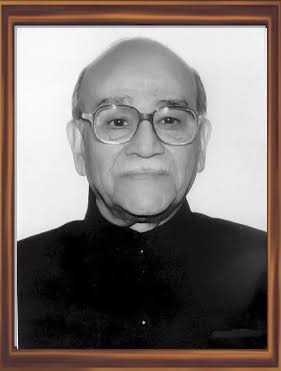
Dr. Khushwant Lal Wig (1904–1986) was a distinguished Indian physician, medical educator, researcher and academic who played an important role in the development of modern medical education in India.
He was particularly associated with tuberculosis and lung diseases, and he made major contributions to medical teaching and institutional development. After Partition, he became an important medical educator in Punjab and later joined the All India Institute of Medical Sciences (AIIMS), New Delhi, where he became Professor of Medicine and subsequently served as Director from 1964 to 1969.
The Government of India honoured him with the Padma Bhushan in 1964 in the field of Medicine. He was also a recipient of the Dr. B. C. Roy National Award, a Fellow of the Royal College of Physicians of London and a Fellow of the American College of Chest Physicians.
His influence continued after his death through the K. L. Wig Centre for Medical Education, Technology & Innovation at AIIMS and the Dr. K. L. Wig Oration instituted by the National Academy of Medical Sciences.
2. Quick Facts
| Detail | Information |
|---|---|
| Full Name | Dr. Khushwant Lal Wig |
| Name Variants | Khushwant Lal Wig / Kushwant Lal Wig / K. L. Wig |
| Date of Birth | 30 September 1904 |
| Place of Birth | Gujranwala, Punjab, British India; now in Pakistan |
| Date of Death | 8 June 1986 |
| Place of Death | Bern, Switzerland |
| Nationality | Indian |
| Profession | Physician, medical educator, academic and writer |
| Field of Achievement | Medicine, medical education, medical research |
| Special Interest | Tuberculosis and lung diseases |
| Years Active | Approximately 1931–1986 |
| Major Institution | All India Institute of Medical Sciences, New Delhi |
| AIIMS Position | Professor of Medicine; Director, 1964–1969 |
| Major National Award | Padma Bhushan, 1964 |
| Other Major Award | Dr. B. C. Roy National Award |
| Major Professional Fellowships | FCCP, 1950; FRCP, 1961 |
The Royal College of Physicians records his qualifications as MB BS (Punjab), 1929; MRCS (England), 1930; DTM&H (1930); MRCP (1931); FCCP (1950); and FRCP (1961).
3. Award Information
Padma Bhushan
Award Name
Padma Bhushan
Award Category
Medicine
Award Year
1964
Presented By
Government of India / President of India
Recipient Name in Government Record
The Government of India’s Padma Awards database records him as:
Dr. Kushwant Lal Wig
and lists:
Padma Bhushan – 1964 – Medicine – Punjab.
Date of Ceremony
The currently accessible official Padma database confirms the 1964 award, but I could not find a sufficiently reliable official source establishing the exact investiture date for Dr. Wig.
Blog recommendation: write “He received the Padma Bhushan in 1964” rather than publishing an uncertain ceremony date.
Citation / Official Reason
The official Padma record identifies the field as Medicine. Contemporary biographical records describe his distinction as a physician and his contribution to medical education, research and the treatment/study of tuberculosis and lung diseases.
Previous Recipients
In the Padma Bhushan’s medical category, Dr. N. N. Bery was among the recipients in 1963.
Next Recipients
Among the Padma Bhushan recipients in Medicine in 1965 were Air Vice Marshal P. Chandra Lal, Lt. General Joginder Singh Dhillon and Lt. General Kashmir Singh Katoch in other categories, while the award was also given to medical and scientific personalities in subsequent years.
Dr. B. C. Roy National Award
Dr. Wig was also a recipient of the prestigious Dr. B. C. Roy National Award, which recognises eminent contributions by medical professionals. The Royal College of Physicians’ historical biography specifically records that he received the award for eminent medical men.
Note: I could not verify a reliable primary-source year for his B. C. Roy Award, so it is better not to publish a specific year without an archival source.
4. Why Did Khushwant Lal Wig Receive the Award?
Dr. Khushwant Lal Wig was honoured for his outstanding contribution to medicine and medical education in India.
His work extended beyond treating individual patients. He devoted much of his professional life to:
- Medical education
- Training doctors
- Medical research
- Tuberculosis and lung-disease studies
- Institutional development
- Postgraduate medical education
- Academic standards in Indian medical colleges
One particularly important decision in his career was giving up much of his private practice so that he could concentrate on advancing medical education in India.
His work at AIIMS helped strengthen the institution’s role as a centre for advanced medical education and research.
5. Early Life
Khushwant Lal Wig was born on 30 September 1904 in Gujranwala, then part of British India and now located in Pakistan. He was the son of Mohan Lal Wig and Dhan Devi Chib.
He grew up in an educated and financially comfortable family. His early education took place in Gujranwala before he moved to Lahore for higher education.
His formative years were shaped by the medical and educational institutions of Lahore, which at the time was one of the major centres of higher education in northern India.
6. Education
Wig had an impressive medical education, including training in both India and Britain.
Early Education
He studied at:
- U.P. Mission High School, Gujranwala
- Government College, Lahore
- Dayanand Anglo-Vedic College, Lahore
He subsequently studied medicine at King Edward Medical College, Punjab University, Lahore, with clinical training at Mayo Hospital, Lahore.
Medical Qualifications
His qualifications included:
- MB BS, Punjab – 1929
- MRCS, England – 1930
- DTM&H – 1930
- MRCP, London – 1931
- FCCP – 1950
- FRCP – 1961
The Royal College of Physicians confirms these qualifications in its historical record.
Postgraduate Training in London
Wig undertook postgraduate studies at the Charing Cross Hospital Medical School in London, where he obtained his MRCP and later became a Fellow of the Royal College of Physicians.
7. Career Journey
Early Medical Career
After completing his postgraduate training in Britain, Wig returned to India and began his medical and academic career.
From 1941 to 1946, he worked as an Assistant Professor in Medicine at King Edward Medical College and Mayo Hospital, Lahore.
Career in Amritsar
Following Partition in 1947, Wig moved to Amritsar.
He became:
- Professor of Medicine
- Senior Visiting Physician at Victoria Jubilee Hospital
- Dean of the Medical Faculty at Punjab University
He remained associated with the Amritsar medical institutions until 1958.
Joining AIIMS
In 1958, Wig joined the newly established All India Institute of Medical Sciences, New Delhi.
He became its first Professor of Medicine. AIIMS records from its early institutional history document the selection of Dr. K. L. Wig for the Department of Medicine.
Director of AIIMS
Wig later became Director of AIIMS from 1964 to 1969.
During his leadership, he was involved in strengthening:
- Undergraduate medical education
- Postgraduate education
- Faculty development
- Medical research
- Teaching methodologies
- Institutional standards
The Royal College of Physicians notes that his work contributed significantly to improving teaching methods at AIIMS.
Medical Education Reformer
In 1959, he received a Rockefeller Foundation travelling grant to study modern methods of medical education in the United States and United Kingdom.
After returning to India, he introduced improvements in teaching and training methods at AIIMS and institutions associated with Punjab University.
8. Major Achievements
1. Strengthening Medical Education
One of Wig’s greatest contributions was his work in improving the quality of medical education in India.
He promoted modern teaching methods for both undergraduate and postgraduate medical students.
2. Leadership at AIIMS
He served as Professor of Medicine and later Director of AIIMS, contributing to the institution’s growth during its formative years.
3. Work on Tuberculosis and Lung Diseases
He was recognised as an authority on tuberculosis and diseases of the lungs.
His published research included a 1935 paper titled “Clinical Evidence of Rheumatic Fever in the Punjab,” published in the Indian Medical Gazette.
4. Medical Research
He contributed numerous articles to scientific journals. The Royal College of Physicians records approximately 35 scientific articles, while other biographical accounts give a higher figure depending on what publications are counted.
5. Professional Leadership
He was associated with several professional and academic organisations, including the:
- Indian Council of Medical Research
- Indian Association of Chest Diseases
- American College of Chest Physicians
- Royal College of Physicians
6. University Examination and Administration
He served as an examiner and academic authority for universities including Punjab, Lucknow, Patna, Delhi and Madras.
9. Contribution to the Nation
Dr. Wig’s contribution to India was primarily through medical education, healthcare and institution building.
Medical Education
He helped establish higher standards in the education and training of Indian doctors.
Development of AIIMS
His leadership during AIIMS’s formative years contributed to its development as a premier centre for medical education, research and healthcare.
Tuberculosis and Respiratory Medicine
His expertise in tuberculosis and lung diseases contributed to India’s medical knowledge in areas that were especially important to public health.
Training Future Doctors
Rather than concentrating solely on private clinical practice, Wig chose to devote much of his career to teaching and institutional development.
National Academic Leadership
He served on university boards, medical committees and the clinical-trials subcommittee of the Indian Council of Medical Research.
10. Other Awards and Honours
Padma Bhushan – 1964
He received India’s Padma Bhushan in Medicine in 1964.
Dr. B. C. Roy National Award
He received the prestigious Dr. B. C. Roy National Award for eminent medical service.
Fellow, American College of Chest Physicians
He became a Fellow of the American College of Chest Physicians (FCCP) in 1950 and served as governor of its Northern India chapter.
Fellow, Royal College of Physicians
He was elected Fellow of the Royal College of Physicians of London in 1961.
Founder Fellow, National Academy of Medical Sciences
He was among the founder fellows of the National Academy of Medical Sciences.
Honorary Doctorate
Banaras Hindu University honoured him with an honorary DSc.
Honorary Physician to the President of India
In 1962, he served as Honorary Physician to the President of India.
11. Legacy and Influence
Dr. K. L. Wig’s legacy is particularly strong in the field of medical education.
After his death, AIIMS named its medical-education centre the:
K. L. Wig Centre for Medical Education, Technology & Innovation (CMETI).
AIIMS documents continue to identify the centre by his name.
The National Academy of Medical Sciences also instituted the Dr. K. L. Wig Oration in his memory.
His legacy therefore extends beyond the awards he received. It is reflected in the continuing emphasis on:
- Medical teacher training
- Educational technology
- Professional development
- Clinical education
- Medical research
- Institutional excellence
His career demonstrated that a physician could contribute to the nation not only through clinical practice but also by building institutions and educating generations of doctors.
12. Interesting Facts
1. He was born in Gujranwala
His birthplace, Gujranwala, was in British India when he was born and is now in Pakistan.
2. He studied in Lahore
His medical education at King Edward Medical College and clinical training at Mayo Hospital placed him in one of the major medical centres of pre-Partition India.
3. He trained in London
He studied at Charing Cross Hospital Medical School and obtained his MRCP in 1931.
4. He became an AIIMS professor in 1958
He joined AIIMS in its early years and became its first Professor of Medicine.
5. He later became AIIMS Director
He served as Director from 1964 to 1969.
6. He was an expert on tuberculosis
The Royal College of Physicians describes him as an authority on tuberculosis and lung diseases.
7. He gave up extensive private practice
He chose to concentrate on advancing medical education in India rather than continuing extensive private practice.
8. He had international professional recognition
He was a Fellow of both the American College of Chest Physicians and the Royal College of Physicians of London.
9. He served as honorary physician to India’s President
He held this position in 1962.
10. His name lives on at AIIMS
AIIMS’s K. L. Wig Centre for Medical Education, Technology & Innovation continues to carry his name.
13. Quotes
There are not many reliably sourced, widely published quotations directly attributed to Dr. K. L. Wig. For a factual biography, it is better not to fill this section with quotations circulating on social media without a primary source.
A useful statement connected with his educational philosophy can instead be presented as a summary of his work:
Dr. Wig believed in strengthening medical education and training so that India could develop its own high-quality medical professionals.
This is a paraphrase of his documented career and should not be presented as a verbatim quotation. His work at AIIMS and his study of modern medical-education methods demonstrate this emphasis.
A verified quotation for context
An important statement about the vision of AIIMS came from Rajkumari Amrit Kaur, the institution’s founder and first President, rather than from Wig. She described the goal of creating an institution that would enable Indian students to receive postgraduate medical education in India.
Blog tip: If your article has a “Quotes” section, clearly distinguish between quotes by K. L. Wig and quotes about his work.
14. Timeline
| Year | Event |
|---|---|
| 1904 | Born on 30 September in Gujranwala |
| 1929 | Obtained MB BS from Punjab University |
| 1930 | Obtained MRCS and DTM&H in England |
| 1931 | Obtained MRCP in London |
| 1930s | Returned to India and continued medical/academic career |
| 1935 | Published research on rheumatic fever in the Punjab |
| 1941–46 | Assistant Professor of Medicine at King Edward Medical College and Mayo Hospital, Lahore |
| 1947 | Moved to Amritsar after Partition |
| 1947–58 | Professor of Medicine and senior visiting physician in Amritsar; associated with Punjab University |
| 1950 | Became Fellow of the American College of Chest Physicians |
| 1958 | Joined AIIMS as Professor of Medicine |
| 1959 | Received Rockefeller Foundation travelling grant to study medical education abroad |
| 1961 | Elected Fellow of the Royal College of Physicians |
| 1961 | President of the annual conference of the Indian Association of Chest Diseases |
| 1962 | Served as Honorary Physician to the President of India |
| 1964 | Received Padma Bhushan in Medicine |
| 1964–69 | Served as Director of AIIMS |
| 1969 | Retired from AIIMS directorship |
| 1986 | Died on 8 June in Bern, Switzerland |
| Later | AIIMS named the K. L. Wig Centre for Medical Education, Technology & Innovation after him |
| Later | National Academy of Medical Sciences instituted the Dr. K. L. Wig Oration |
The major career dates are supported by the Royal College of Physicians and AIIMS historical material.
15. References
For your blog, these are the strongest references to cite:
1. Government of India – Padma Awards
The official Padma Awards database confirms Dr. Kushwant Lal Wig – Padma Bhushan – 1964 – Medicine – Punjab.
Government of India – Padma Awards Dashboard
2. Royal College of Physicians – Historical Biography
The Royal College of Physicians provides detailed information about his education, medical qualifications, career, AIIMS service, tuberculosis work and professional honours.
Royal College of Physicians – Khushwant Lal Wig
3. AIIMS Historical Material
AIIMS historical documentation records the selection and role of Dr. K. L. Wig in the institution’s early development.
AIIMS – Historical Documentation
4. Medical Research
His 1935 paper on rheumatic fever in Punjab is preserved in PubMed Central.
PubMed Central – Clinical Evidence of Rheumatic Fever in the Punjab
5. K. L. Wig Centre
AIIMS documents confirm the continued use of the K. L. Wig Centre for Medical Education, Technology & Innovation name.
16. Related Personalities
Rajkumari Amrit Kaur
Rajkumari Amrit Kaur was the first President of AIIMS and played a major role in establishing the institution. Her institutional vision provided the setting in which Wig and other early medical educators worked.
Dr. B. B. Dikshit
Dr. Bhalchandra Babaji Dikshit was the founding Director of AIIMS before Wig became Director. The AIIMS historical record places Dikshit’s tenure before Wig’s.
Dr. Sujoy B. Roy
Dr. Sujoy B. Roy was appointed Professor of Cardiology at AIIMS during the institution’s formative period alongside the selection of Wig for Medicine.
Dr. Jivraj Mehta
Dr. Jivraj Mehta was an important figure in India’s health administration and was involved in the early governance and development of AIIMS.
Dr. B. C. Roy
Dr. Bidhan Chandra Roy was the eminent physician after whom the Dr. B. C. Roy National Award was named. Wig was himself a recipient of this prestigious medical honour.
17. Frequently Asked Questions (FAQ)
Who was Khushwant Lal Wig?
Khushwant Lal Wig was an Indian physician, medical educator, researcher and academic who made major contributions to medicine and medical education.
When was Khushwant Lal Wig born?
He was born on 30 September 1904 in Gujranwala, Punjab, British India.
Where was Khushwant Lal Wig born?
He was born in Gujranwala, which is now in Pakistan.
What was Khushwant Lal Wig famous for?
He was particularly known for medical education, research, tuberculosis and lung diseases, and his leadership at AIIMS.
When did Khushwant Lal Wig join AIIMS?
He joined AIIMS in 1958 as Professor of Medicine.
Was Khushwant Lal Wig the Director of AIIMS?
Yes. He served as Director of AIIMS from 1964 to 1969.
Which award did Khushwant Lal Wig receive in 1964?
He received the Padma Bhushan in 1964 in the field of Medicine.
Did Khushwant Lal Wig receive the Dr. B. C. Roy Award?
Yes. The Royal College of Physicians’ historical biography records him as a recipient of the Dr. B. C. Roy National Award.
What were Khushwant Lal Wig’s medical qualifications?
His qualifications included MB BS (Punjab), MRCS (England), DTM&H, MRCP, FCCP and FRCP.
What did Khushwant Lal Wig study in London?
He undertook postgraduate medical studies at Charing Cross Hospital Medical School in London.
What diseases was Khushwant Lal Wig particularly associated with?
He was regarded as an authority on tuberculosis and lung diseases.
Did he conduct medical research?
Yes. He published scientific articles, including research concerning diseases such as rheumatic fever and respiratory conditions.
What is the K. L. Wig Centre?
The K. L. Wig Centre for Medical Education, Technology & Innovation at AIIMS is named in his honour and continues work related to medical education and training.
What is the Dr. K. L. Wig Oration?
It is an annual oration instituted by the National Academy of Medical Sciences in memory of Dr. K. L. Wig.
When did Khushwant Lal Wig die?
He died on 8 June 1986 in Bern, Switzerland.
Conclusion
Dr. Khushwant Lal Wig was one of the important pioneers of India’s modern medical education system. His contribution was not limited to clinical medicine. He helped build institutions, train doctors, improve teaching methods and strengthen medical research.
His career took him from Gujranwala and Lahore to Amritsar and ultimately AIIMS, New Delhi, where he served as Professor of Medicine and later Director. His expertise in tuberculosis and lung diseases, combined with his commitment to medical education, earned him national and international professional recognition.
His Padma Bhushan in 1964, Dr. B. C. Roy National Award, FRCP and other honours reflected his stature in Indian medicine. His continuing legacy at AIIMS through the K. L. Wig Centre for Medical Education, Technology & Innovation and the Dr. K. L. Wig Oration demonstrates that his influence continues beyond his lifetime.
About the Author