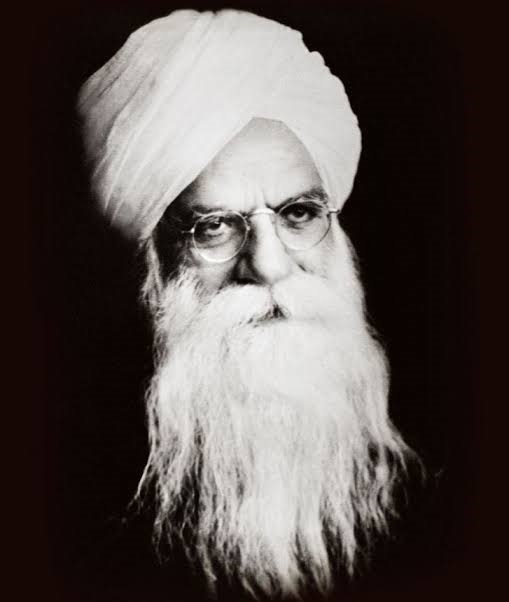
1. Introduction
Bhai Vir Singh (5 December 1872 – 10 June 1957) was a celebrated Indian Sikh scholar, poet, novelist, theologian, and literary pioneer. Often referred to as the “Father of Modern Punjabi Literature,” he played a transformative role in the revival of Punjabi language, Sikh literature, and religious thought. Through his poetry, novels, essays, and historical writings, he inspired generations of readers and contributed significantly to the cultural and spiritual renaissance of Punjab. In recognition of his outstanding contribution to literature and education, the Government of India awarded him the Padma Bhushan in 1956, making him one of the earliest recipients of the honour.
2. Quick Facts
| Item | Details |
|---|---|
| Full Name | Bhai Vir Singh |
| Native Name | ਭਾਈ ਵੀਰ ਸਿੰਘ (Punjabi) |
| Date of Birth | 5 December 1872 |
| Place of Birth | Amritsar, Punjab, British India (present-day Punjab, India) |
| Date of Death | 10 June 1957 |
| Nationality | Indian |
| Occupation / Profession | Poet, Novelist, Scholar, Theologian, Editor |
| Field of Achievement | Punjabi Literature, Sikh Studies, Poetry |
| Years Active | 1890–1957 |
| Known For | Father of Modern Punjabi Literature, Sikh renaissance, Punjabi poetry |
3. Award Information
| Item | Details |
|---|---|
| Award Name | Padma Bhushan |
| Award Category | Literature & Education |
| Award Year | 1956 |
| Presented By | President of India |
| Date of Ceremony | 26 January 1956 (award announced; investiture held later) |
| Official Citation / Reason | Distinguished contribution to Punjabi literature, education, and Sikh scholarship |
| Previous Recipients | Not applicable (annual civilian honour) |
| Next Recipients | The Padma Bhushan continued to be awarded annually to other distinguished personalities |
4. Why Did Bhai Vir Singh Receive the Award?
Bhai Vir Singh was awarded the Padma Bhushan for his extraordinary contributions to:
- Modern Punjabi literature.
- Sikh philosophy and religious scholarship.
- Poetry and prose writing.
- Preservation and promotion of Punjabi language.
- Educational and cultural development.
His literary works helped revive Punjabi literature during a period of social and cultural transformation.
5. Early Life
Bhai Vir Singh was born on 5 December 1872 in Amritsar, Punjab, into a deeply religious Sikh family renowned for its scholarship. His father, Dr. Charan Singh, was a respected physician and scholar, and the family’s intellectual environment greatly influenced his literary interests.
From an early age, he developed a passion for Punjabi, Sanskrit, Persian, and religious studies.
6. Education
Vir Singh received his early education at the Church Mission School in Amritsar, where he studied English along with traditional Indian languages. He became proficient in:
- Punjabi
- Sanskrit
- Persian
- Urdu
- English
His broad linguistic knowledge later enriched his literary and theological writings.
7. Career Journey
Early Literary Career
- Began writing during the late nineteenth century.
- Joined the Singh Sabha Movement, which sought to revive Sikh religious and cultural traditions.
- Became associated with the Khalsa Tract Society, publishing religious and educational literature.
Literary Contributions
- Published novels, poetry, biographies, essays, and religious commentaries.
- Edited important Sikh publications.
- Helped standardize modern Punjabi literary style.
Later Years
- Continued writing until the end of his life.
- Earned recognition as the foremost Punjabi literary figure of his era.
8. Major Achievements
- Known as the Father of Modern Punjabi Literature.
- Wrote pioneering Punjabi novels such as Sundari, Bijay Singh, Satwant Kaur, and Baba Naudh Singh.
- Authored the epic poem Rana Surat Singh.
- Produced important works on Sikh history and theology.
- Played a leading role in the Punjabi literary renaissance.
- Inspired generations of Punjabi writers and scholars.
9. Contribution to the Nation
Bhai Vir Singh made enduring contributions by:
- Reviving Punjabi language and literature.
- Preserving Sikh history and philosophy.
- Promoting moral and spiritual values through literature.
- Encouraging education and literary scholarship.
- Strengthening India’s cultural heritage through regional literature.
- Inspiring literary movements across Punjab.
His writings remain central to Punjabi literary studies.
10. Other Awards and Honours
- Padma Bhushan (1956).
- Widely honored by literary, cultural, and Sikh organizations.
- Educational institutions and literary societies continue to commemorate his work through memorial lectures, awards, and publications.
11. Legacy and Influence
Bhai Vir Singh’s legacy continues through:
- His enduring influence on Punjabi poetry and prose.
- His role in shaping modern Punjabi literary language.
- His contribution to Sikh religious scholarship.
- The continued popularity of his novels and poems.
- His recognition as one of the greatest writers in Punjabi literature.
Today, his works are studied in universities across India and abroad.
12. Interesting Facts
- He is widely called the Father of Modern Punjabi Literature.
- He wrote in multiple genres, including poetry, novels, essays, and theology.
- His novel Sundari remains one of the classics of Punjabi literature.
- He played an important role in the Singh Sabha Movement.
- He combined literary excellence with spiritual philosophy.
- Many of his writings continue to be translated into several languages.
13. Quotes
One of the best-known lines associated with Bhai Vir Singh’s spiritual outlook is:
“The fragrance always remains in the hand that gives the rose.”
Note: This quotation is frequently attributed to Bhai Vir Singh in popular collections, but its original source in his published works is not firmly established. For academic or formal publications, verify quotations using primary editions of his writings.
14. Timeline
| Year | Event |
|---|---|
| 1872 | Born in Amritsar |
| 1890s | Began literary career |
| 1898 | Published Sundari |
| 1905 | Published Rana Surat Singh |
| Early 1900s | Became a leading figure in the Punjabi literary renaissance |
| 1956 | Awarded the Padma Bhushan |
| 1957 | Passed away on 10 June |
15. References
- Sahitya Akademi – Information on Punjabi literature and Bhai Vir Singh.
- Punjab Digital Library – Digitized works and historical records.
- Government of India Padma Awards archives.
- Scholarly biographies and literary histories on Bhai Vir Singh and modern Punjabi literature.
16. Related Personalities
- Puran Singh
- Amrita Pritam
- Nanak Singh
- Bhai Kahn Singh Nabha
- Guru Nanak
17. Frequently Asked Questions (FAQ)
Q1. Who was Bhai Vir Singh?
Bhai Vir Singh was a Sikh scholar, poet, novelist, and theologian, widely regarded as the Father of Modern Punjabi Literature.
Q2. When was Bhai Vir Singh born?
He was born on 5 December 1872 in Amritsar, Punjab.
Q3. Which award did Bhai Vir Singh receive?
He received the Padma Bhushan in 1956.
Q4. Why was Bhai Vir Singh awarded the Padma Bhushan?
He was honored for his exceptional contributions to Punjabi literature, education, Sikh scholarship, and cultural revival.
Q5. What are Bhai Vir Singh’s most famous works?
His best-known works include Sundari, Bijay Singh, Satwant Kaur, Baba Naudh Singh, and the epic poem Rana Surat Singh.
Q6. Why is he called the Father of Modern Punjabi Literature?
He modernized Punjabi prose and poetry, introduced new literary styles, and inspired a renaissance in Punjabi language and Sikh literature.
Q7. When did Bhai Vir Singh die?
He passed away on 10 June 1957.
Q8. What is Bhai Vir Singh’s legacy?
His legacy lives on through his pioneering literary works, his contributions to Sikh scholarship, and his lasting influence on Punjabi language, literature, and culture.
About the Author