

Introduction
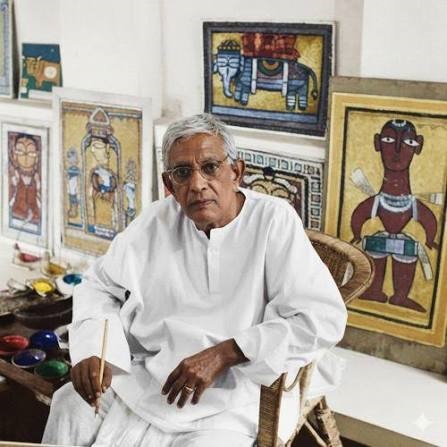
Jamini Roy was one of India’s most celebrated painters and a key figure in the development of modern Indian art. He is known for creating a unique artistic style by combining traditional Indian folk and village art forms with modern painting techniques. His simple yet powerful paintings reflected Indian culture, rural life, mythology, and everyday people. Jamini Roy played an important role in bringing Indian art to global recognition.
Early Life
Jamini Roy was born on 11 April 1887 in Beliatore, Bankura district, Bengal Presidency (present-day West Bengal, India). He was born into a middle-class family with an artistic background. His father, Ramataran Roy, left his government job to pursue painting as a hobby, which influenced Jamini Roy’s interest in art.
From a young age, Roy showed great talent and passion for drawing and painting. His early surroundings, including village traditions, folk art, and rural culture, later became major inspirations for his artwork.
Birth Date and Death
- Birth: 11 April 1887
- Birth Place: Beliatore, Bankura, West Bengal, India
- Death: 24 April 1972
- Age at Death: 85 years
Jamini Roy spent most of his life dedicated to painting and promoting Indian artistic traditions.
Education and Career
Jamini Roy studied at the prestigious Government College of Art & Craft, Kolkata in 1903. During his early career, he followed the European academic style of painting, especially realistic portraiture and oil painting.
Later, he moved away from Western techniques and developed his own style inspired by Indian folk traditions such as:
- Kalighat paintings of Bengal
- Village crafts
- Traditional Indian murals
- Tribal art forms
His goal was to create art that was simple, affordable, and connected to ordinary Indian people.
Why Did Jamini Roy Receive the Padma Bhushan Award?
Jamini Roy received the Padma Bhushan award in 1955 from the Government of India for his outstanding contribution to the field of art and painting.
He was honored because:
- He created a distinct Indian style of modern painting.
- He revived traditional Indian folk art techniques.
- His paintings represented Indian culture, spirituality, and rural life.
- He helped introduce Indian art to audiences around the world.
The Padma Bhushan recognized his lifelong dedication to preserving and promoting India’s artistic heritage.
Career and Achievements
Jamini Roy’s artistic journey went through several stages. Initially, he painted portraits using Western academic methods, but he later developed a style based on Indian traditions.
Some of his major achievements include:
- Creating a new style of Indian modern art.
- Making paintings inspired by Indian mythology, village life, and folk traditions.
- Using natural colors and simple lines in his artworks.
- Making art accessible to common people by producing affordable paintings.
- Gaining international recognition for Indian art.
His famous works include paintings based on:
- Krishna and Radha
- Mother and Child
- Santhal dancers
- Biblical themes
- Village scenes
Field of Achievements
Jamini Roy’s main field of achievement was:
Painting and Visual Arts
He transformed Indian painting by combining:
- Traditional folk techniques
- Modern artistic ideas
- Indian cultural themes
His work became an important part of the Indian modern art movement.
Awards and Honours
Jamini Roy received several awards and recognitions during his lifetime:
- Padma Bhushan (1955) – Government of India
- Lalit Kala Akademi Fellowship (1956) – One of India’s highest honors in the field of visual arts
- His paintings were displayed in national and international exhibitions.
- His artworks became part of major art collections and museums.
Interesting Facts About Jamini Roy
- Jamini Roy originally trained in Western-style painting but later rejected it to create an Indian identity in art.
- He was inspired by the simple beauty of rural Bengal.
- He used materials such as natural pigments and handmade colors.
- He often painted on inexpensive surfaces instead of expensive canvases.
- His paintings were influenced by folk traditions and village artists.
- He believed that art should be available to everyone, not only wealthy collectors.
Legacy and Inspiration
Jamini Roy’s legacy continues to influence artists across India and the world. He proved that traditional Indian art forms could become a powerful part of modern art.
His paintings inspired future generations of artists to explore India’s cultural roots and traditional techniques. Today, his artworks are preserved in museums, galleries, and private collections.
Contribution to the Nation
Jamini Roy made significant contributions to India by:
- Promoting Indian cultural identity through art.
- Preserving traditional folk art styles.
- Bringing Indian paintings to international attention.
- Encouraging artists to value local traditions and heritage.
- Making art more accessible to ordinary people.
His work helped strengthen India’s cultural image after independence.
Conclusion
Jamini Roy was not only a great painter but also a cultural ambassador who transformed Indian art. By blending folk traditions with modern creativity, he created a unique artistic language that represented the spirit of India. His dedication, innovation, and love for Indian culture earned him national and international respect. Even today, Jamini Roy remains an inspiration for artists and art lovers around the world.
You can use this as a complete blog article. It can also be shortened into a school project format or expanded with images and a timeline if needed.
About the Author




