Introduction
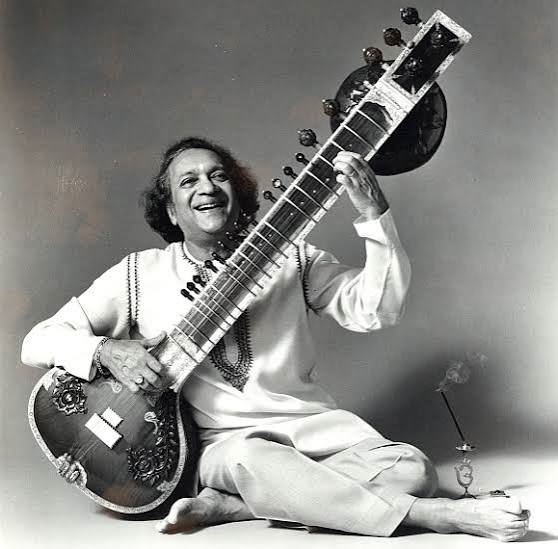
Ravi Shankar was one of the greatest musicians in the history of Indian classical music. A legendary sitar virtuoso, composer, and cultural ambassador, he introduced Indian classical music to audiences around the world. Through his extraordinary talent, creativity, and collaborations with international artists, he played a major role in making Indian music globally recognized. For his exceptional contribution to the arts, he was honoured with the Padma Vibhushan, India’s second-highest civilian award.
Early Life
Ravi Shankar was born as Robindro Shankar Chowdhury in Varanasi, Uttar Pradesh. He belonged to a Bengali Brahmin family. As a young boy, he joined his brother Uday Shankar’s dance troupe and travelled across Europe and India, where he was exposed to different cultures and artistic traditions.
Later, he decided to dedicate his life to Indian classical music and began intensive training under the legendary musician Ustad Allauddin Khan.
Birth Date and Death
- Full Name: Robindro Shankar Chowdhury
- Popular Name: Ravi Shankar
- Date of Birth: April 7, 1920
- Place of Birth: Varanasi, Uttar Pradesh, India
- Date of Death: December 11, 2012
- Age at Death: 92 years
- Place of Death: San Diego, California, USA
Education and Career
Education
Ravi Shankar received traditional training in Indian classical music under Ustad Allauddin Khan, the founder of the Maihar gharana. He learned sitar, musical composition, and the principles of Hindustani classical music through years of disciplined practice.
Career
Ravi Shankar began his professional music career in the 1930s and became one of the most influential musicians of the 20th century.
Major highlights of his career include:
- Popularized the sitar as a major classical instrument worldwide.
- Served as a composer for Indian films, including Pather Panchali directed by Satyajit Ray.
- Performed at prestigious international music festivals.
- Collaborated with famous Western musicians, including George Harrison.
- Established cultural connections between India and the rest of the world through music.
Why Did He Receive the Padma Vibhushan Award?
Padma Vibhushan was awarded to Ravi Shankar in 1981 for his exceptional and distinguished contribution to the field of Art, especially Indian classical music.
He received this prestigious honour because:
- He elevated Indian classical music to an international level.
- He introduced the sitar and Hindustani music traditions to global audiences.
- He inspired musicians worldwide through his innovative performances.
- He preserved and promoted India’s musical heritage.
- He became a cultural ambassador representing India across the world.
Career and Achievements
Some of Ravi Shankar’s major achievements include:
- Became the world’s most famous sitar player.
- Introduced Indian classical music to millions of international listeners.
- Performed at iconic global events such as the Monterey Pop Festival (1967) and Woodstock Festival (1969).
- Composed music for films, orchestras, and international performances.
- Created new musical collaborations blending Indian and Western traditions.
- Served as a mentor and inspiration for generations of musicians.
Field of Achievement
Ravi Shankar made remarkable contributions in:
- Hindustani Classical Music
- Sitar Performance
- Music Composition
- Film Music
- Cultural Diplomacy
- International Music Collaboration
Awards and Honours
Ravi Shankar received numerous prestigious awards, including:
- Padma Bhushan (1967)
- Padma Vibhushan (1981)
- Bharat Ratna (1999) – India’s highest civilian award
- Ramon Magsaysay Award (1992)
- Three Grammy Awards
- Grammy Lifetime Achievement Award (2013, posthumously)
- Honorary awards from universities and international cultural institutions
Interesting Facts
- Ravi Shankar was known as the “Godfather of World Music” by many admirers.
- He played a major role in introducing the sitar to Western audiences.
- He was a close friend and musical influence on George Harrison of The Beatles.
- His daughters include famous musicians Anoushka Shankar and singer Norah Jones.
- He performed for audiences across six continents.
- He composed music for films, concerts, and international orchestras.
Legacy and Inspiration
Ravi Shankar’s legacy extends far beyond his music. He transformed the perception of Indian classical music worldwide and created a bridge between Indian traditions and global musical cultures.
His dedication, creativity, and lifelong pursuit of excellence continue to inspire musicians around the world. His work remains a symbol of India’s rich cultural heritage and artistic contribution to humanity.
Contribution to the Nation
Ravi Shankar contributed significantly to India by:
- Promoting Indian classical music internationally.
- Representing India’s cultural identity on global platforms.
- Preserving and popularizing the sitar tradition.
- Inspiring young musicians to learn Indian classical music.
- Strengthening cultural relations between India and other countries.
- Bringing worldwide recognition to India’s artistic traditions.
Conclusion
Ravi Shankar was a musical genius whose talent and dedication made Indian classical music a global phenomenon. Through his mastery of the sitar, innovative compositions, and international collaborations, he created a lasting impact on world music. The Padma Vibhushan and other honours recognized his extraordinary contribution to Indian arts. His music continues to inspire generations and remains a proud symbol of India’s cultural excellence.
About the Author