

Introduction
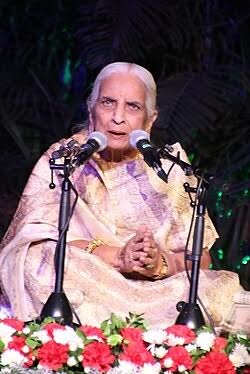
Girija Devi was one of India’s most celebrated Hindustani classical vocalists, widely known as the “Queen of Thumri.” She played a pivotal role in preserving and popularizing the Purab Ang style of Thumri and other semi-classical forms such as Dadra, Kajri, Chaiti, and Hori. Her melodious voice, exceptional artistry, and lifelong dedication to Indian classical music earned her numerous prestigious awards, including the Padma Vibhushan, India’s second-highest civilian honour.
Early Life
Girija Devi was born into a culturally rich family in Varanasi, Uttar Pradesh. Her father, Ramdeo Rai, was a landlord who loved music and encouraged her musical training from an early age. She began learning classical music at the age of five under renowned gurus and quickly displayed extraordinary talent.
Despite societal restrictions on women performing publicly during that period, she pursued her passion with determination and became one of India’s greatest classical singers.
Birth Date and Death
- Full Name: Girija Devi
- Date of Birth: May 8, 1929
- Place of Birth: Varanasi, Uttar Pradesh, India
- Date of Death: October 24, 2017
- Age at Death: 88 years
- Place of Death: Kolkata, West Bengal, India
Education and Career
Education
Girija Devi received her early education in Varanasi while simultaneously undergoing rigorous training in Hindustani classical music. She studied under eminent teachers, including Pandit Sarju Prasad Mishra and later Pandit Shri Chand Mishra, who trained her in the traditions of the Banaras Gharana.
Career
Girija Devi began performing publicly in the late 1940s and soon became one of India’s leading classical vocalists.
Her career highlights include:
- Specialized in Thumri, Dadra, Kajri, Chaiti, Hori, and Khayal.
- Performed at prestigious music festivals in India and abroad.
- Served as a faculty member at the ITC Sangeet Research Academy.
- Mentored many young musicians, helping preserve the Banaras musical tradition.
- Popularized semi-classical music among audiences worldwide.
Why Did She Receive the Padma Vibhushan Award?
Padma Vibhushan was conferred upon Girija Devi in 2016 for her exceptional and distinguished service in the field of Art, particularly Hindustani classical and semi-classical music.
She received this prestigious honour because:
- She preserved and promoted the Purab Ang style of Thumri.
- She dedicated over six decades to Indian classical music.
- She trained and inspired generations of musicians.
- She popularized traditional music forms both nationally and internationally.
- She made an outstanding contribution to India’s cultural heritage.
Career and Achievements
Some of Girija Devi’s major achievements include:
- Earned the title “Queen of Thumri.”
- Performed at leading national and international music festivals.
- Revived and popularized traditional forms such as Kajri, Chaiti, Dadra, and Hori.
- Mentored numerous students through teaching and workshops.
- Helped preserve the rich musical heritage of the Banaras Gharana.
- Received widespread recognition as one of India’s greatest classical vocalists.
Field of Achievement
Girija Devi made remarkable contributions in:
- Hindustani Classical Music
- Thumri Singing
- Semi-Classical Music
- Music Education
- Cultural Preservation
- Indian Performing Arts
Awards and Honours
Girija Devi received many prestigious awards, including:
- Padma Shri (1972)
- Sangeet Natak Akademi Award (1977)
- Padma Bhushan (1989)
- Sangeet Natak Akademi Fellowship (2010) – the academy’s highest honour
- Padma Vibhushan (2016)
Interesting Facts
- She was affectionately known as the “Queen of Thumri.”
- She started learning music at the age of five.
- She acted in a Hindi film as a child before focusing entirely on music.
- She mastered several musical forms, including Thumri, Dadra, Kajri, Chaiti, and Hori.
- She trained hundreds of students during her lifetime.
- She remained active in music and teaching well into her later years.
Legacy and Inspiration
Girija Devi’s legacy lives on through her recordings, performances, and disciples. She transformed Thumri into a respected concert art form while preserving the traditional musical heritage of North India. Her dedication, discipline, and artistic excellence continue to inspire aspiring musicians across the world.
She is remembered not only as an extraordinary performer but also as a devoted teacher who ensured that India’s classical music traditions would continue to flourish for future generations.
Contribution to the Nation
Girija Devi made significant contributions to India by:
- Preserving India’s rich classical and semi-classical music traditions.
- Promoting Indian culture through performances around the world.
- Training young musicians and safeguarding traditional musical knowledge.
- Reviving folk-inspired musical forms of eastern Uttar Pradesh and Bihar.
- Enhancing India’s cultural identity through her lifelong devotion to music.
Conclusion
Girija Devi was one of India’s greatest classical vocalists and a true ambassador of the nation’s musical heritage. Her remarkable mastery of Thumri and other semi-classical forms earned her worldwide admiration and numerous prestigious honours, including the Padma Vibhushan. Through her performances, teaching, and unwavering dedication to Indian classical music, she left behind a lasting legacy that continues to inspire musicians and music lovers across generations.
About the Author




