Introduction
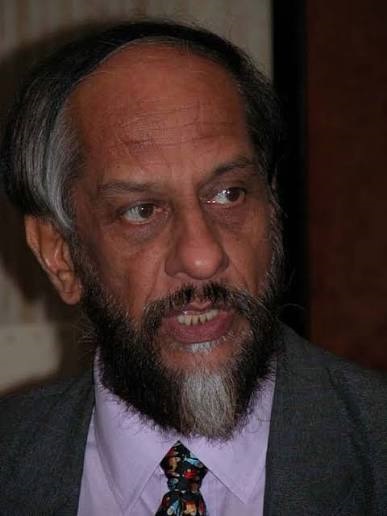
Rajendra K. Pachauri was a renowned Indian environmentalist, economist, and climate change expert. He was internationally recognized for his leadership in climate science and sustainable development. He served as the Chairman of the Intergovernmental Panel on Climate Change (IPCC), an organization that received the Nobel Peace Prize in 2007. Through his research, leadership, and environmental advocacy, Pachauri played an important role in raising global awareness about climate change and sustainable development.
Why Did He Receive the Padma Vibhushan Award?
Rajendra K. Pachauri was awarded the Padma Vibhushan, India’s second-highest civilian honour, in 2008 for his exceptional contributions to science and engineering.
The award recognized his:
- Leadership in climate change research and policy.
- Contribution to environmental protection and sustainable development.
- Role in bringing global attention to climate challenges.
- Efforts to promote renewable energy and responsible resource management.
- International leadership through the IPCC.
Career and Achievements
Rajendra Pachauri had a distinguished career combining economics, environmental science, and public policy.
Major achievements include:
- Served as Chairman of the IPCC from 2002 to 2015.
- Led the IPCC when it shared the 2007 Nobel Peace Prize with Al Gore.
- Served as Director-General of The Energy and Resources Institute (TERI) for many years.
- Promoted research on renewable energy, climate change, energy efficiency, and sustainable development.
- Worked with governments and international organizations on environmental policies.
- Authored numerous research papers and books on energy and environmental issues.
Early Life
Rajendra Kumar Pachauri was born in Nainital, Uttarakhand, India. From a young age, he showed interest in science, technology, and learning. His strong academic background and passion for sustainable development guided him toward a career focused on energy, economics, and environmental protection.
Birth Date and Death
- Born: 20 August 1940
- Birthplace: Nainital, Uttarakhand, India
- Died: 13 February 2020
- Age at Death: 79 years
Education and Career
Education
Rajendra Pachauri had an impressive academic background:
- Studied at Indian Railways Institute of Mechanical and Electrical Engineering.
- Earned a Bachelor of Engineering degree.
- Completed a Master’s degree in Industrial Engineering from North Carolina State University.
- Received a PhD in Industrial Engineering and Economics from North Carolina State University.
Career
His professional journey included:
- Worked in academic and research institutions in the United States.
- Joined TERI and became its Director-General.
- Led climate research initiatives in India and internationally.
- Became Chairman of IPCC in 2002.
- Advised governments and organizations on climate policies and sustainable development.
Field of Achievement
Rajendra Pachauri made significant contributions in:
- Climate Science
- Environmental Protection
- Sustainable Development
- Energy Policy
- Economics
- Renewable Energy Research
- International Environmental Cooperation
Awards and Honours
Some of his major awards and honours include:
- Padma Vibhushan (2008) – Government of India.
- Nobel Peace Prize (2007) – Awarded to IPCC and Al Gore for work on climate change.
- Padma Bhushan (2001) – Government of India.
- Officier de la Légion d’Honneur – France.
- Several international awards for environmental leadership and sustainable development.
Interesting Facts
- Rajendra Pachauri was one of the most influential voices on climate change in the world.
- Under his leadership, the IPCC produced important climate assessment reports used by governments worldwide.
- He worked to promote renewable energy and reduce dependence on fossil fuels.
- He was the first Asian to become Chairman of the IPCC.
- He wrote and edited several books and research publications on climate, energy, and sustainability.
- He believed that economic growth and environmental protection should progress together.
Legacy and Inspiration
Rajendra Pachauri’s legacy lies in his efforts to make climate change a global priority. His scientific leadership helped governments, organizations, and communities understand the importance of protecting the environment.
He inspired scientists, policymakers, and young people to work toward sustainable development and climate solutions. His life demonstrated how scientific knowledge can be used to address global challenges.
Contribution to the Nation
Rajendra Pachauri contributed to India by:
- Promoting renewable energy and sustainable development.
- Strengthening India’s role in global climate discussions.
- Encouraging research in energy efficiency and environmental conservation.
- Leading TERI as a major institution for environmental research.
- Advising policymakers on climate and energy-related issues.
- Creating awareness about responsible use of natural resources.
His work helped India participate more actively in global efforts to address climate change.
Conclusion
Rajendra K. Pachauri was a visionary environmental leader whose work influenced climate policies around the world. Through his leadership at TERI and the IPCC, he made significant contributions to climate science, sustainable development, and environmental awareness. Honoured with the Padma Vibhushan in 2008, his efforts continue to inspire scientists, environmentalists, and future generations to protect the planet and build a sustainable future.
About the Author