
Introduction
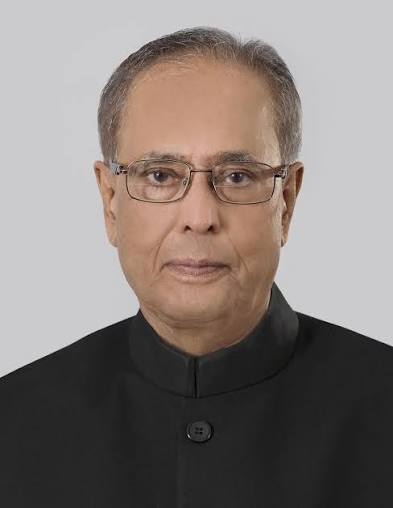
Pranab Mukherjee was one of India’s most respected politicians, statesmen, and constitutional leaders. With a public career spanning over five decades, he served in several key ministerial positions, including Finance, Defence, External Affairs, and Commerce, before becoming the 13th President of India from 2012 to 2017. Known for his deep knowledge of governance, parliamentary procedures, and public policy, Pranab Mukherjee played a significant role in shaping modern India’s political and economic landscape.
Why Did He Receive the Padma Vibhushan Award?
Pranab Mukherjee was awarded the Padma Vibhushan, India’s second-highest civilian honour, in 2008 for his exceptional contribution to Public Affairs. The award recognized his decades of distinguished service in government, his leadership in economic reforms, foreign policy, defence, parliamentary affairs, and his commitment to strengthening India’s democratic institutions.
Career and Achievements
Pranab Mukherjee began his political career in 1969 after being elected to the Rajya Sabha. Over the years, he became one of India’s most experienced policymakers and held several important portfolios.
Some of his major achievements include:
- Served as the 13th President of India (2012–2017).
- Held the positions of Finance Minister, Defence Minister, External Affairs Minister, and Commerce Minister.
- Played a key role in framing India’s economic and financial policies.
- Represented India at major international forums, including the International Monetary Fund (IMF), World Bank, G20, and the United Nations.
- Guided important parliamentary discussions and constitutional matters.
- Authored books on Indian politics, governance, and public administration.
Early Life
Pranab Mukherjee was born in Mirati village, Birbhum district, West Bengal, into a family actively involved in India’s freedom movement. His father, Kamada Kinkar Mukherjee, was a freedom fighter and member of the West Bengal Legislative Council. Growing up in a politically aware environment inspired Pranab Mukherjee to dedicate his life to public service.
Birth Date and Death
- Born: 11 December 1935
- Birthplace: Mirati, Birbhum, West Bengal, India
- Died: 31 August 2020
- Age at Death: 84 years
Education and Career
Education
Pranab Mukherjee completed his higher education at University of Calcutta, where he earned:
- Master’s degree in History
- Master’s degree in Political Science
- Bachelor of Laws (LL.B.)
Before entering politics, he worked as:
- College lecturer
- Journalist
- Advocate
Career
His distinguished political career included:
- Member of the Rajya Sabha for several terms.
- Finance Minister of India.
- Defence Minister of India.
- External Affairs Minister of India.
- Leader of the House in Parliament.
- 13th President of India (2012–2017).
Field of Achievement
Pranab Mukherjee made remarkable contributions in:
- Public Affairs
- Politics
- Governance
- Economic Policy
- Foreign Affairs
- Constitutional Administration
- Parliamentary Leadership
Awards and Honours
Pranab Mukherjee received numerous honours during his lifetime, including:
- Bharat Ratna (2019) – India’s highest civilian award.
- Padma Vibhushan (2008) – Government of India.
- Best Parliamentarian Award (1997).
- Several honorary doctorates from Indian and international universities.
- International recognition for his contributions to diplomacy and public administration.
Interesting Facts
- Pranab Mukherjee served in Parliament for more than 50 years.
- He was often referred to as the “walking encyclopedia” of Indian politics because of his exceptional memory and knowledge of parliamentary procedures.
- Before entering politics, he worked as a teacher and journalist.
- He authored several books, including The Coalition Years: 1996–2012, The Dramatic Decade: The Indira Gandhi Years, and The Presidential Years: 2012–2017.
- Despite holding many senior positions, he was widely respected across political parties for his wisdom and ability to build consensus.
Legacy and Inspiration
Pranab Mukherjee is remembered as one of India’s finest statesmen. His commitment to constitutional values, democratic institutions, and public service continues to inspire politicians, civil servants, students, and citizens. His ability to bridge political differences and his dedication to national development made him an enduring symbol of responsible leadership.
Contribution to the Nation
Pranab Mukherjee made lasting contributions to India by:
- Strengthening India’s democratic and constitutional institutions.
- Guiding economic reforms and financial policymaking.
- Enhancing India’s foreign relations through diplomacy.
- Improving defence and national security policies.
- Promoting education, governance, and parliamentary traditions.
- Serving as President with dignity, impartiality, and commitment to the Constitution.
His leadership significantly influenced India’s political stability and economic development.
Conclusion
Pranab Mukherjee was one of India’s most distinguished political leaders, whose remarkable career reflected dedication, wisdom, and integrity. From serving in key ministerial roles to becoming the 13th President of India, he made invaluable contributions to governance, diplomacy, and economic policy. Honoured with the Padma Vibhushan in 2008 and the Bharat Ratna in 2019, his legacy continues to inspire future generations of leaders committed to public service and nation-building.
About the Author