Introduction
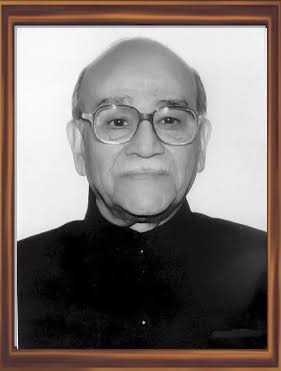
P. N. Bhagwati was one of India’s most influential judges and legal thinkers. He is remembered for his major contributions to constitutional law, human rights, and judicial reforms. As the 17th Chief Justice of India, he played an important role in expanding access to justice and introducing the concept of Public Interest Litigation (PIL) in India. His progressive approach helped make the judiciary more accessible to ordinary citizens.
Why Did P. N. Bhagwati Receive the Padma Vibhushan Award?
P. N. Bhagwati was awarded the Padma Vibhushan in 2007 for his exceptional contribution to the field of public affairs and justice.
He received this prestigious honour for:
- His outstanding service as a judge and Chief Justice of India.
- His contribution to protecting fundamental rights.
- His role in developing Public Interest Litigation (PIL), which allowed citizens to seek justice for social causes.
- His efforts to make the legal system more accessible to disadvantaged groups.
His work significantly influenced the development of Indian constitutional law.
Early Life
Prafullachandra Natwarlal Bhagwati was born into a respected family with a strong connection to education and public service. His father, N. H. Bhagwati, was also a distinguished jurist and former judge of the Supreme Court of India.
From an early age, P. N. Bhagwati showed interest in law, social issues, and justice. His dedication helped him become one of India’s most respected legal personalities.
Birth Date and Death
- Full Name: Prafullachandra Natwarlal Bhagwati
- Date of Birth: 21 December 1921
- Place of Birth: Bombay (now Mumbai), Maharashtra, India
- Death: 15 June 2017
He lived a long life dedicated to law, justice, and public service.
Education and Career
P. N. Bhagwati received his education in India and pursued law as his career.
Career Journey:
- He studied at the University of Bombay and completed his legal education.
- He began practicing law at the Bombay High Court.
- He became a judge of the Gujarat High Court.
- He later served as the Chief Justice of the Gujarat High Court.
- He was appointed as a judge of the Supreme Court of India.
- From 1985 to 1986, he served as the Chief Justice of India.
Throughout his career, he focused on strengthening constitutional protections and improving access to justice.
Field of Achievements
P. N. Bhagwati’s major achievements were in the field of law and judiciary.
Major Contributions:
- Introduced and developed the concept of Public Interest Litigation (PIL) in India.
- Expanded the meaning and interpretation of fundamental rights under the Constitution.
- Supported legal aid for poor and disadvantaged communities.
- Promoted judicial activism to address social issues.
- Helped make courts more accessible to ordinary citizens.
His judicial philosophy had a lasting impact on Indian democracy.
Awards and Honours
P. N. Bhagwati received several awards and recognitions, including:
- Padma Vibhushan (2007) – India’s second-highest civilian award.
- Honours from various legal institutions and universities.
- International recognition for his contributions to human rights and justice.
He was respected both in India and internationally for his legal ideas.
Interesting Facts About P. N. Bhagwati
- He was one of the pioneers of Public Interest Litigation (PIL) in India.
- He served as the 17th Chief Justice of India.
- He believed that justice should be available to everyone, not only those with resources.
- His judgments influenced social justice movements in India.
- He was associated with legal reforms and human rights discussions at national and international levels.
Legacy and Inspiration
P. N. Bhagwati’s legacy lies in making the Indian judiciary more people-oriented. His efforts helped transform courts into institutions that could address issues affecting society as a whole.
He continues to inspire lawyers, judges, and students to use law as a tool for fairness, equality, and social change.
Contribution to the Nation
P. N. Bhagwati contributed to India by:
- Strengthening constitutional rights.
- Making justice more accessible through PIL.
- Supporting the rights of weaker sections of society.
- Encouraging judicial reforms.
- Promoting the values of equality and fairness.
His contributions helped shape the modern Indian legal system.
Conclusion
P. N. Bhagwati was a visionary jurist whose ideas transformed the role of the judiciary in India. His dedication to constitutional values, human rights, and social justice earned him the prestigious Padma Vibhushan award. His legacy continues through the principles of accessible justice and the belief that law should serve every section of society.
About the Author