Introduction
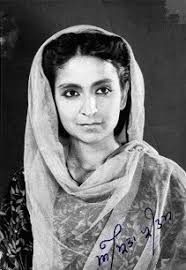
Amrita Pritam was one of the most celebrated writers of India. She was a poet, novelist, essayist, and literary figure who wrote mainly in Punjabi and Hindi. Known for her powerful expression of love, pain, freedom, and social issues, she became a symbol of courage and creativity in Indian literature. She was the first prominent female Punjabi poet and played an important role in bringing women’s voices into literature.
Early Life
Amrita Pritam was born as Amrit Kaur on 31 August 1919 in Gujranwala, Punjab (now in Pakistan). Her father, Kartar Singh Hitkari, was a scholar, poet, and editor, while her mother, Raj Bibi, was a school teacher. Amrita lost her mother at a young age, which deeply influenced her writing and emotional outlook.
She grew up in a literary environment and began writing poetry as a teenager. The struggles of her early life shaped many of her later works.
Birth Date and Death
- Birth: 31 August 1919
- Birthplace: Gujranwala, Punjab (British India, now Pakistan)
- Death: 31 October 2005
- Place of Death: New Delhi, India
Amrita Pritam lived for 86 years and left behind a rich collection of poems, novels, and essays.
Education and Career
Amrita Pritam received her early education in Lahore. She began writing at a very young age and published her first poetry collection, “Amrit Lehran” (Immortal Waves), in 1935 when she was only 16 years old.
During her career, she worked as an editor and writer. She was associated with literary magazines and used her writing to address issues such as women’s rights, social injustice, love, and the trauma of Partition.
Her literary career lasted for more than six decades, during which she wrote over 100 books, including poetry collections, novels, short stories, and biographies.
Career and Achievements
Some of Amrita Pritam’s major achievements include:
- Becoming one of the most important Punjabi writers of the 20th century.
- Writing about the pain and suffering caused by the Partition of India in 1947.
- Creating famous works that explored human emotions and social realities.
- Becoming the first female recipient of the Sahitya Akademi Award.
- Representing Indian literature internationally through her writings.
Her famous works include:
- “Ajj Aakhaan Waris Shah Nu” – A deeply emotional poem about the tragedy of Partition.
- “Pinjar” – A novel highlighting the suffering of women during Partition.
- “Rasidi Ticket” – Her famous autobiography.
- “Sunehade” – A poetry collection that won the Sahitya Akademi Award.
Field of Achievements
Amrita Pritam made significant contributions in:
- Punjabi Literature: She transformed Punjabi poetry with her unique style and emotional depth.
- Women’s Literature: She highlighted women’s experiences, struggles, and independence.
- Partition Literature: She documented the human suffering caused by Partition.
- Poetry and Fiction: Her poems, novels, and stories continue to inspire readers worldwide.
Why Did Amrita Pritam Receive the Padma Vibhushan Award?
Amrita Pritam was awarded the Padma Vibhushan in 2005, India’s second-highest civilian award, for her exceptional and distinguished contribution to literature and education.
She received this honour because of her:
- Outstanding contribution to Punjabi and Indian literature.
- Powerful writings on social issues, women’s struggles, and human emotions.
- Role in enriching Indian culture through poetry, novels, and essays.
- Influence on generations of writers and readers.
Awards and Honours
Amrita Pritam received many prestigious awards, including:
- Sahitya Akademi Award (1956) – for her poetry collection Sunehade.
- Padma Shri (1969) – awarded by the Government of India.
- Jnanpith Award (1981) – one of India’s highest literary honours.
- Padma Vibhushan (2005) – for her outstanding contribution to literature.
- Sahitya Akademi Fellowship (2004) – one of the highest honours given by the Sahitya Akademi.
Interesting Facts About Amrita Pritam
- She started writing poetry at the age of 16.
- She was the first major female Punjabi poet.
- Her poem “Ajj Aakhaan Waris Shah Nu” is considered one of the most powerful writings about the Partition of India.
- Her autobiography “Rasidi Ticket” became famous for its honest and personal style.
- She wrote in both Punjabi and Hindi.
- Her novel “Pinjar” was adapted into a successful Hindi film in 2003.
- She was known for her fearless opinions and independent personality.
Legacy and Inspiration
Amrita Pritam’s writings continue to inspire people because of their honesty, emotional power, and focus on human dignity. She broke traditional barriers for women writers and encouraged many young authors to express their thoughts freely.
Her work remains an important part of Indian literature and continues to be studied in schools, colleges, and universities.
Contribution to the Nation
Amrita Pritam contributed to India by:
- Preserving and promoting Punjabi language and literature.
- Giving a voice to women and marginalized communities through her writings.
- Recording the emotional impact of the Partition of India.
- Promoting values of humanity, equality, and compassion.
- Inspiring future generations of writers and thinkers.
Conclusion
Amrita Pritam was not only a great writer but also a courageous thinker who used literature to express the realities of society. Through her poems, novels, and essays, she highlighted love, suffering, freedom, and human relationships. Her remarkable contribution to Indian literature earned her national recognition, including the prestigious Padma Vibhushan award. Her words continue to inspire millions and ensure that her legacy lives on.
About the Author