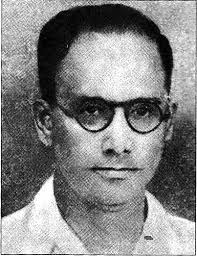
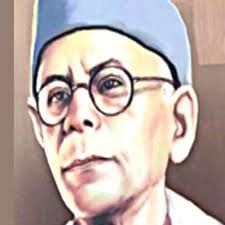
Vengal Chakkarai (Vengal Chakkarai Chettiar)
Vengal Chakkarai was a prominent Indian freedom fighter, social reformer, trade union leader, theologian, and politician from Tamil Nadu. He played an important role in India’s independence movement while also working for labor rights and social justice. He is remembered as one of the leading Christian nationalists who actively supported the struggle against British rule.
Early Life and Education
Vengal Chakkarai Chettiar was born on 17 January 1880 in Madras (now Chennai), Tamil Nadu, into a prosperous Chettiar family. He received his early education at the Scottish Mission School in Madras and later studied at Madras Christian College, where he graduated with a degree in Philosophy in 1901. He subsequently studied law at Madras Law College and briefly practiced as a lawyer.
Education & Skills
Chakkarai possessed strong academic and intellectual abilities. His educational background in philosophy and law helped him develop skills in:
- Public speaking and leadership
- Legal knowledge and advocacy
- Social reform and labor organization
- Religious and philosophical writing
- Political activism
He was known for combining Indian cultural traditions with modern social and political thought.
Contribution to Tamil Literature
Although Vengal Chakkarai is primarily remembered as a theologian and social activist rather than a Tamil literary figure, he contributed significantly to religious and philosophical literature. His writings attempted to explain Christian teachings using Indian and Hindu philosophical concepts, making them more accessible to Indian readers.
Some of his notable works include:
- Jesus the Avatar (1927)
- The Cross and Indian Thought (1932)
His writings encouraged dialogue between Indian culture and Christianity and contributed to intellectual discussions in South India.
Role in India’s Freedom Movement
Vengal Chakkarai actively participated in the Indian freedom struggle and became a follower of Mahatma Gandhi. He supported nationalist causes and joined movements opposing British colonial rule.
His contributions included:
- Supporting the Indian National Movement.
- Promoting self-rule and national unity.
- Participating in Gandhi’s Non-Cooperation Movement.
- Advocating workers’ rights as part of the broader freedom struggle.
- Working to connect social justice with political independence.
Labor Movement and Public Service
One of Chakkarai’s most important contributions was his work for labor rights. He became associated with the trade union movement and later served as President of the All India Trade Union Congress. He worked to improve the living and working conditions of industrial laborers.
He also served as the Mayor of Madras from 1941 to 1942, where he contributed to civic administration and public welfare.
Personal Life
Born into a Hindu family, Chakkarai later embraced Christianity. Despite his conversion, he strongly believed that Indian Christians should remain connected to Indian culture and traditions. He became a leading thinker advocating the “Indianization” of Christianity and sought harmony between Indian philosophy and Christian beliefs.
Death
Vengal Chakkarai passed away on 14 June 1958 in Madras (Chennai). His death marked the end of a remarkable life dedicated to nationalism, social reform, labor welfare, and religious thought.
Why Important in Indian History
Vengal Chakkarai occupies an important place in Indian history because:
- He actively supported India’s freedom movement.
- He championed workers’ rights and labor welfare.
- He served as a respected public leader and Mayor of Madras.
- He promoted social harmony and interfaith understanding.
- He helped develop indigenous Christian thought in India.
Legacy and Recognition
Today, Vengal Chakkarai is remembered as:
- A freedom fighter and nationalist.
- A pioneer of the labor movement in South India.
- A respected theologian and social thinker.
- A leader who combined patriotism with social justice.
His contributions continue to inspire scholars, labor activists, and students of Indian history.
Conclusion
Vengal Chakkarai Chettiar was a multifaceted leader whose life reflected dedication to India’s freedom, workers’ welfare, social reform, and intellectual growth. Through his political activism, labor leadership, and writings, he left a lasting impact on Indian society. His efforts to bridge cultural, religious, and social divides make him a significant figure in the history of modern India.
About the Author