Introduction
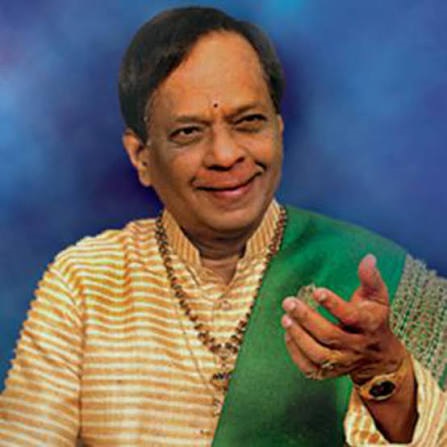
Mangalampalli Balamuralikrishna was one of India’s greatest Carnatic musicians, admired for his extraordinary voice, creativity, and dedication to Indian classical music. A gifted vocalist, composer, instrumentalist, and actor, he transformed Carnatic music through innovation while preserving its rich traditions. His remarkable talent earned him national and international recognition, making him one of the most respected musicians in Indian history.
Early Life
M. Balamuralikrishna was born into a family deeply connected with music.
- Full Name: Mangalampalli Balamuralikrishna
- Date of Birth: July 6, 1930
- Place of Birth: Sankaraguptam, East Godavari district, Andhra Pradesh, India
- His father, Pattabhiramayya, was a musician, and his mother, Suryakanthamma, was a skilled veena player.
- He displayed exceptional musical talent at a very young age and gave his first public performance when he was only eight years old.
Birth Date and Death
- Born: July 6, 1930
- Died: November 22, 2016
- Age at Death: 86 years
- Place of Death: Chennai, Tamil Nadu, India
Although he passed away in 2016, his music continues to inspire generations of artists and listeners.
Education and Career
Unlike formal academic education, Balamuralikrishna received rigorous training in Carnatic music from his guru Parupalli Ramakrishnayya Pantulu. Under his guidance, he mastered classical music at an early age.
His career spanned more than seven decades. He performed thousands of concerts across India and around the world. Apart from singing, he was also a composer, music director, playback singer, and actor. He introduced several new ragas and compositions, demonstrating his exceptional creativity.
Career and Achievements
M. Balamuralikrishna achieved many milestones throughout his career:
- Performed thousands of concerts worldwide.
- Composed over 400 devotional and classical compositions.
- Created new ragas such as Mahathi, Lavangi, Sarvasri, and Sumanapriya.
- Played several musical instruments, including the violin, viola, veena, and mridangam.
- Sang in multiple Indian languages, including Telugu, Tamil, Kannada, Sanskrit, Malayalam, Hindi, and Bengali.
- Worked as a playback singer and music composer for films.
- Promoted Indian classical music internationally through concerts and cultural events.
Field of Achievement
M. Balamuralikrishna made outstanding contributions in:
- Carnatic Vocal Music
- Music Composition
- Instrumental Music
- Playback Singing
- Music Direction
- Cultural Promotion and Education
His innovations expanded the scope of Carnatic music while maintaining its traditional foundations.
Why Did He Receive the Padma Vibhushan Award?
M. Balamuralikrishna received the Padma Vibhushan, India’s second-highest civilian award, in 1991 for his exceptional contribution to Indian classical music.
The award recognized:
- His lifelong dedication to Carnatic music.
- His innovative compositions and creation of new ragas.
- His role in preserving and promoting India’s musical heritage.
- His international recognition as a cultural ambassador of Indian classical music.
- His influence on generations of musicians and music lovers.
Awards and Honours
Throughout his life, M. Balamuralikrishna received numerous prestigious awards, including:
- Padma Shri (1971)
- Padma Vibhushan (1991)
- Sangeet Natak Akademi Award
- Sangeetha Kalanidhi
- Chevalier of the Ordre des Arts et des Lettres (France)
- National Film Award for Best Playback Singer
- Several honorary doctorates from universities in India and abroad
These honors reflected his immense contribution to music and culture.
Interesting Facts
- He gave his first concert at the age of eight.
- He composed music in all 72 Melakarta ragas.
- He invented several new ragas that are still performed today.
- He could play many classical instruments with great skill.
- He recorded thousands of devotional, classical, and film songs.
- His concerts were appreciated by audiences across the world.
- He mentored many young musicians and encouraged innovation in classical music.
Legacy and Inspiration
M. Balamuralikrishna’s legacy continues through his recordings, compositions, and students. His fearless approach to musical innovation inspired countless musicians to explore new ideas while respecting tradition.
Music institutions, artists, and listeners continue to celebrate his work, ensuring that his contributions remain an important part of India’s cultural heritage.
Contribution to the Nation
M. Balamuralikrishna made significant contributions to India by:
- Preserving and promoting Carnatic music.
- Representing Indian culture at international music festivals.
- Inspiring young musicians through performances and teaching.
- Enriching Indian cinema with memorable songs.
- Strengthening India’s cultural identity through classical music.
His efforts helped bring Indian classical music to audiences across the globe.
Conclusion
M. Balamuralikrishna was much more than a celebrated singer—he was a visionary who transformed Carnatic music with creativity, discipline, and passion. His exceptional talent, innovative spirit, and lifelong dedication earned him some of India’s highest honors, including the Padma Vibhushan. Even today, his music continues to inspire millions, making him one of the greatest legends in the history of Indian classical music.
About the Author