

Introduction
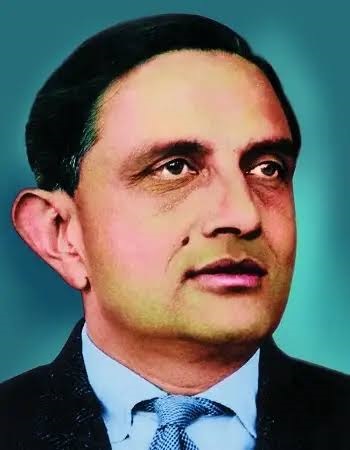
Vikram Sarabhai was one of India’s greatest scientists and visionaries. He is widely known as the Father of the Indian Space Programme because of his pioneering efforts in developing India’s space research capabilities. He played a major role in establishing India’s space institutions and believed that science and technology should be used for the development of society.
Early Life
Vikram Ambalal Sarabhai was born on 12 August 1919 in Ahmedabad, Gujarat, India. He belonged to the well-known Sarabhai family, which was involved in industry, education, and social service.
From childhood, he showed great curiosity about science and mathematics. His interest in research and innovation encouraged him to pursue a career in physics.
Birth Date and Death
- Full Name: Vikram Ambalal Sarabhai
- Born: 12 August 1919, Ahmedabad, Gujarat, India
- Died: 30 December 1971, Kovalam, Kerala, India
- Age at Death: 52 years
Although he lived for only 52 years, his contributions transformed India’s scientific progress.
Education and Career
Vikram Sarabhai completed his early education in Ahmedabad and later studied at the University of Cambridge, United Kingdom. He earned his degree in Natural Sciences and later completed his PhD in cosmic ray research.
After returning to India, he began research in physics and established important scientific institutions.
Scientific Career:
- Founded the Physical Research Laboratory (PRL) in 1947, which became a leading centre for space and atmospheric research.
- Established India’s space research programme.
- Played a key role in creating the Indian Space Research Organisation (ISRO) in 1969.
- Helped establish the Indian Institute of Management Ahmedabad (IIMA).
- Promoted the use of satellites for communication, education, and development.
Why Did Vikram Sarabhai Receive the Padma Vibhushan Award?
Vikram Sarabhai was awarded the Padma Vibhushan in 1972 (posthumously) for his exceptional contributions to science, space research, and national development.
He received this honour because:
- He laid the foundation of India’s space programme.
- He established major scientific institutions.
- He promoted the use of space technology for national development.
- He encouraged scientific research and innovation in India.
- His leadership helped India become a growing force in space science.
Career and Achievements
Vikram Sarabhai made remarkable contributions to Indian science and technology.
Major achievements:
- Founded the Physical Research Laboratory in Ahmedabad.
- Established the Indian space programme.
- Played a key role in setting up the Thumba Equatorial Rocket Launching Station in Kerala.
- Encouraged satellite technology for communication, weather forecasting, and education.
- Helped develop India’s scientific research infrastructure.
- Guided many young scientists, including future leaders of India’s space programme.
- Contributed to the development of institutions in science, management, and performing arts.
Field of Achievements
Vikram Sarabhai contributed to several fields:
1. Space Science
He introduced and developed space research activities in India.
2. Physics
His early research focused on cosmic rays and atmospheric science.
3. Technology for Development
He believed that space technology could improve communication, education, agriculture, and disaster management.
4. Institution Building
He created and supported several institutions that continue to contribute to India’s progress.
Awards and Honours
Some important awards and recognitions received by Vikram Sarabhai include:
- Padma Bhushan (1966) – For his contributions to science and technology.
- Padma Vibhushan (1972, posthumously) – India’s second-highest civilian award.
- Shanti Swarup Bhatnagar Medal (1962) – For outstanding scientific contributions.
- Several national and international recognitions for his work in space science.
Interesting Facts About Vikram Sarabhai
- He is known as the Father of the Indian Space Programme.
- He founded ISRO, which later became one of the world’s leading space organizations.
- He believed that science should directly benefit ordinary people.
- He was also interested in arts, culture, and education.
- His wife, Mrinalini Sarabhai, was a famous classical dancer.
- The Indian space centre Vikram Sarabhai Space Centre is named in his honour.
Legacy and Inspiration
Vikram Sarabhai’s vision continues to inspire scientists, engineers, and students across India. His belief that science should serve humanity shaped India’s approach to space research.
His dedication, creativity, and leadership helped India move from a developing nation’s scientific efforts to becoming a major player in space exploration.
Contribution to the Nation
Vikram Sarabhai contributed to India by:
- Building the foundation of India’s space programme.
- Establishing world-class scientific institutions.
- Promoting the use of technology for education and development.
- Encouraging scientific research and innovation.
- Inspiring generations of scientists and engineers.
Conclusion
Vikram Sarabhai was a visionary scientist whose ideas changed the future of India’s science and technology. His efforts created the foundation for India’s achievements in space exploration and scientific research. Through his dedication, innovation, and belief in using science for social progress, he remains one of India’s greatest scientific heroes. His legacy continues to inspire the nation’s journey toward new discoveries and achievements.
About the Author




