

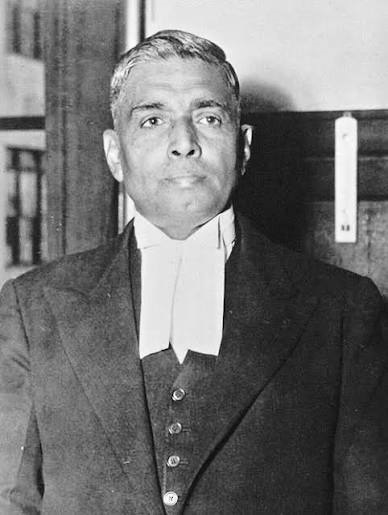
Introduction
Radhabinod Pal (27 January 1886 – 10 January 1967) was one of India’s most distinguished jurists, legal scholars, and judges. He is internationally renowned for his role as a judge at the International Military Tribunal for the Far East (Tokyo War Crimes Tribunal) after World War II. Known for his deep knowledge of law, independent thinking, and commitment to justice, Justice Radhabinod Pal made lasting contributions to both Indian jurisprudence and international law. His courageous legal opinions earned him worldwide respect and continue to be studied by legal scholars today.
Why Did Radhabinod Pal Receive the Padma Vibhushan Award?
Radhabinod Pal was awarded the Padma Vibhushan in 1960 for his exceptional contributions to law, justice, and public affairs. The award recognized his:
- Outstanding service as one of India’s foremost judges and legal scholars.
- Significant contributions to international law and jurisprudence.
- Distinguished role as the Indian judge at the Tokyo War Crimes Tribunal.
- Lifelong dedication to judicial independence, fairness, and the rule of law.
- Contributions to legal education and constitutional thought in India.
Career and Achievements
Justice Radhabinod Pal enjoyed an illustrious career in academia, law, and the judiciary.
Some of his major achievements include:
- Served as a Judge of the Calcutta High Court.
- Represented India as a judge at the International Military Tribunal for the Far East (Tokyo War Crimes Tribunal).
- Authored the famous dissenting opinion at the Tokyo Tribunal, arguing that the accused should not be convicted under laws created after the alleged crimes, making his judgment one of the most discussed legal opinions in international law.
- Served as Vice-Chancellor of the University of Calcutta.
- Contributed extensively to legal research, taxation law, and constitutional studies.
- Gained international recognition for his scholarship and judicial independence.
Early Life
Radhabinod Pal was born on 27 January 1886 in Kushtia, then part of the Bengal Presidency, British India (now in Bangladesh). Despite facing financial hardships during his childhood, he excelled academically through determination and hard work. His passion for mathematics and law laid the foundation for an extraordinary legal career.
Education and Career
Education
Radhabinod Pal completed his higher education at:
- University of Calcutta
He initially studied Mathematics, earning distinction in the subject, before pursuing Law, where he established himself as an exceptional scholar.
Professional Career
- Began his career as a mathematics teacher.
- Later became a professor of law and taxation.
- Practiced law and gained recognition for his legal expertise.
- Appointed Judge of the Calcutta High Court.
- Served as India’s representative judge at the Tokyo War Crimes Tribunal.
- Held important academic and judicial positions throughout his career.
Field of Achievement
Justice Radhabinod Pal made remarkable contributions in several fields:
- Law
- Judiciary
- International Law
- Legal Education
- Constitutional Studies
- Taxation Law
- Human Rights and Judicial Philosophy
His work continues to influence legal education and international legal discussions.
Awards and Honours
- Padma Vibhushan (1960) – Awarded for exceptional service in law and public affairs.
- Honored by several universities and legal institutions for his scholarly contributions.
- Received international recognition for his judicial work and writings.
- His legacy is especially remembered in Japan, where memorials and academic discussions continue to acknowledge his contributions to international legal history.
Interesting Facts
- Justice Radhabinod Pal was the only judge at the Tokyo War Crimes Tribunal to issue a complete dissent from the majority judgment.
- His dissenting opinion exceeded 1,200 pages and remains one of the most extensively studied judicial opinions in international law.
- He believed that justice should be based on established legal principles rather than retrospective punishment.
- He was an accomplished scholar in both mathematics and law.
- His legal philosophy emphasized fairness, judicial independence, and adherence to the rule of law.
- His writings continue to be referenced by legal scholars around the world.
Legacy and Inspiration
Justice Radhabinod Pal’s legacy extends far beyond India’s borders. He is remembered as a fearless jurist who upheld his legal principles even when his views differed from the majority. His dedication to independent judicial reasoning has inspired generations of judges, lawyers, academics, and students. His work continues to shape discussions on international criminal law, judicial ethics, and the importance of an impartial judiciary.
Contribution to the Nation
Radhabinod Pal made significant contributions to India by:
- Strengthening the country’s judicial system through his service as a High Court judge.
- Advancing legal education through teaching and academic leadership.
- Representing India with distinction at an important international tribunal.
- Promoting judicial independence and constitutional values.
- Contributing to legal scholarship in taxation, constitutional law, and international law.
- Enhancing India’s reputation in the global legal community through his scholarship and integrity.
Conclusion
Justice Radhabinod Pal was one of India’s greatest legal minds and an internationally respected jurist. His commitment to justice, judicial independence, and the rule of law earned him admiration across the world. Through his distinguished service as a judge, scholar, and educator, he made lasting contributions to Indian jurisprudence and international law. The Padma Vibhushan recognized his extraordinary service to the nation, and his legacy continues to inspire legal professionals, scholars, and students who value fairness, integrity, and independent thinking.
About the Author




